
Last updated November 16, 2026
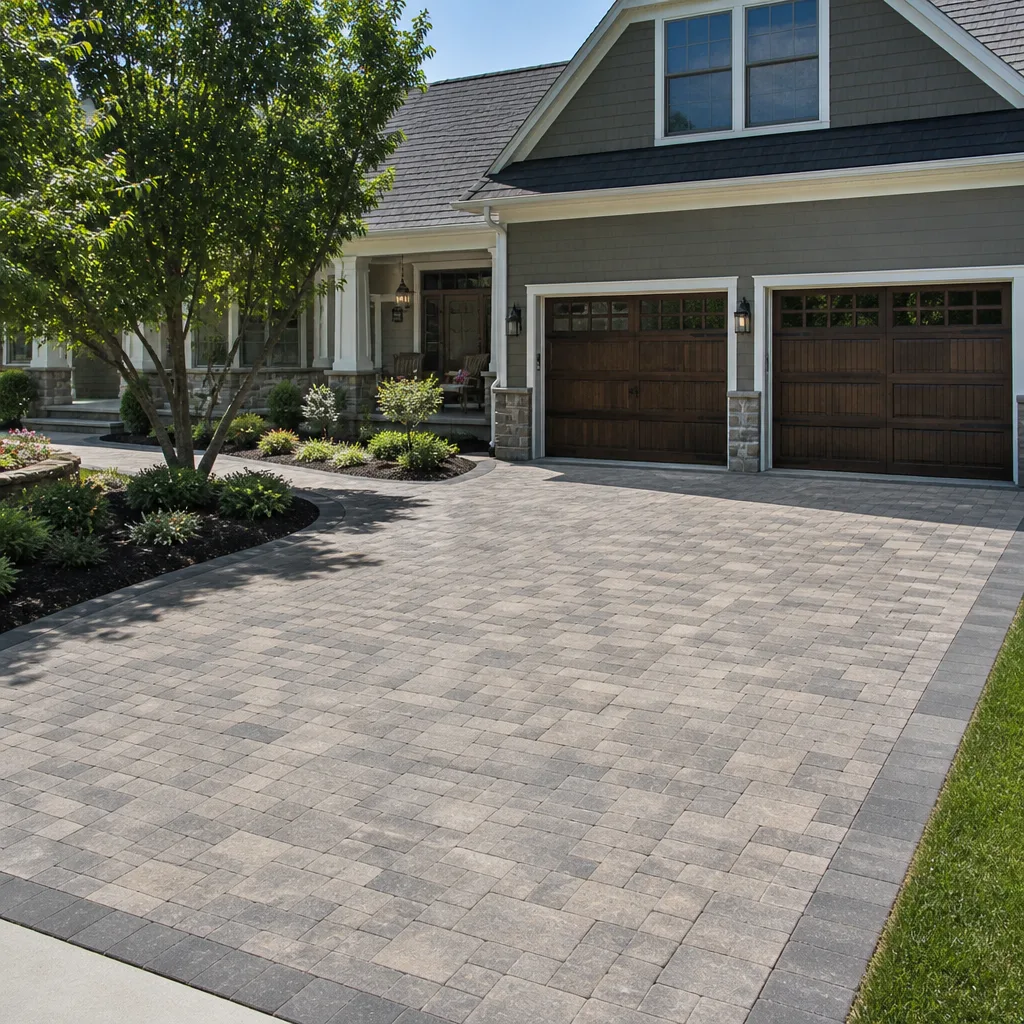 Driveway & pavers
 Kitchen remodeling
 Bathroom remodeling
 Home additions & ADU
 Roofing
 Windows & doors
 Fence
Free written scope consultation - allowances, timeline, and change-order rules on paper before a single trade is scheduled
Driveway & Pavers Troubleshooting in Palmdale: Common Problems and How to Fix Them
A paver that rocks underfoot and a paver cracked down the middle look like two different problems. In Palmdale, they often share one cause: a base layer that got compacted before the soil moisture was right, leaving voids that the desert heat finishes off over a few summers. Homeowners here tend to blame the pavers themselves, then buy the wrong fix (more sand, a tube of crack filler, a pressure wash) and watch the problem return. This guide is about diagnosing before you spend. We’ll walk through the string-line test that separates surface settling from base failure, the washout patterns the wind and summer storms create, why the field wants to creep outward, when a warranty should cover the repair, and what to look for in a quote before you sign one.
Quick Answer
Most driveway paver problems in Palmdale fall into three root causes: a base that was compacted at the wrong moisture level, polymeric sand lost to wind scouring and short intense rain, and edge creep driven by thermal expansion. Re-leveling a few loose units, re-sanding, and adding edge restraint fix the first-stage symptoms. Once a whole field is moving or a base has voids you can feel, the repair needs excavation and a proper compacted base, not a patching job.
Styles & brands we work with
- Kitchen remodeling
- Bathroom remodeling
- Home additions & ADU
- Roofing
- Windows & doors
- Driveway & pavers
- Fence
Table of Contents
- How do you tell surface settling from base failure?
- Why is there a white haze on the pavers?
- Why does the polymeric sand keep washing out?
- What is edge creep and why does it happen here?
- Why do pavers crack and pit?
- How should water move off a Palmdale driveway?
- What should the warranty actually cover?
- What does a repair typically cost?
How do you tell surface settling from base failure?
Surface settling is a handful of units dropping out of plane, and it can be re-leveled unit by unit. Base failure is a whole section losing its support, and it always requires excavation. The way to tell the two apart is a string-line test, and any homeowner can run it in about ten minutes.
Here’s the test:
- Stretch a taut string line across the driveway from a high, stable point on one side to a matching point on the other, over the area that looks off.
- Look at the gap between the string and the paver surface. A dip of roughly a quarter inch across a single unit is normal movement. A dip that grows over several feet, or a hump the string sits on top of, is a section problem.
- Walk the area slowly and listen. A click or rock in one or two units is local. A soft, hollow feel that runs in a straight line outward from a joint suggests voids underneath.
- Press hard at the joints between units. If the joint opens when you press and closes when you let go, the field is moving as a mass, not just a few pavers.
If the test reveals local movement, individual units can be lifted, the sand bed re-leveled, and the field re-set. If the field is moving as a mass, or the dips span several units in a line, that’s base failure. In Palmdale this often traces back to a base installed in summer when the subsoil was bone dry and the water that should have been added during compaction never reached the right depth. The pavers looked fine for a season, then the heat opened up voids the traffic slowly crushed down. Diagnosing which problem you have is the first step, and it’s the one that saves the most money.
Why is there a white haze on the pavers?
That chalky white film is efflorescence, and it’s almost always cosmetic. It’s mineral salts pulled to the surface by moisture moving through the concrete or the mortar below, and it flashes off as the surface dries. It looks alarming on a new driveway. It rarely means anything structural.
Efflorescence is common in the desert because the temperature swing between day and night pulls moisture upward, leaves the salts behind, and repeats. The trap is cleaning it wrong. The protocol differs between concrete pavers and natural stone, and getting that wrong does more damage than the efflorescence itself.
For concrete pavers:
- Start with a dry brush. Often the film is surface salt and a stiff broom knocks it back without any chemical at all.
- If it persists, use a specialty efflorescence remover mixed at the label dose. These are mild acids. Wet the pavers thoroughly first so the product acts on the surface, not inside the pores.
- Keep the dwell time short and rinse generously. Over-applying an acid wash etches the face of the paver and dulls the color permanently.
For natural stone, skip acid products entirely. Mild acid etches stone fast. Use a pH-neutral stone cleaner, work small sections, rinse, and repeat over weeks instead of trying to strip it all in one pass. Efflorescence returns until the moisture source dries out. Clean, then wait.
Why does the polymeric sand keep washing out?
The sand in your joints is doing two jobs: locking the units together and blocking water and weed seed. When it disappears, the field loosens. In Palmdale the washout is not the slow, steady erosion you see in wetter climates. It’s a two-step pattern: wind scours the top of the joint over a dry season, then a short intense summer rain hits, the joint is too shallow to hold, and the rain washes out what the wind loosened.
That’s why a standard re-sand doesn’t permanently solve it. The re-sanded joint starts out just as shallow as the last one, and the next wind-and-rain cycle repeats. Fixes that only refill the joint without addressing depth and compaction are back to square one in a season or two.
What actually holds in Palmdale:
- Joint depth. Polymeric sand needs a joint deep enough to bind. Shallow joints on tight pavers can’t hold sand no matter what product you use.
- Correct compaction. The sand needs to settle with vibration and then be wetted exactly per the manufacturer’s instructions. Wetting too early or too generously pushes the binder off the joint face.
- Edge restraint. Sand migrates fastest at the perimeter. A properly staked edge locks the boundary and keeps the interior joint under pressure.
- Drainage slope. Water ponding on the surface finds the lowest joint and eats it. The driveway should shed water off the surface, not pool on it.
When the joint has been re-sanded three or four times without holding, that’s not a sand problem. It’s a sign the base has shifted and the field is no longer tight. At that point, re-leveling and re-sanding is the right scope. We’ve seen the same install go from constant maintenance to stable after a proper re-set, and the difference was depth and compaction, not a different bag of sand.
What is edge creep and why does it happen here?
Edge creep is the outward migration of the whole paver field, and it shows up most at driveways without proper edge restraint. The pavers shift a fraction of an inch each time the temperature swings, the field grows, and eventually the outer row is riding up or over the edge. Palmdale sees this more than milder climates because the day-to-night temperature swing is wide and repeated, and a paver field expands and contracts a little every day. Without a boundary that resists it, the field wins.
You can spot it without digging:
- Look down the edge of the driveway. A straight line that has become slightly bowed means the field is pushing outward.
- Lift the outer corner of a perimeter paver gently. If it won’t lift cleanly and feels like it’s under outward pressure, that’s the field pushing.
- Check the joint width along the outer two rows. If it’s noticeably wider than the joints in the center, the edge is holding and the interior is compressing, or the edge has failed and the field is migrating into it.
The fix that holds is a proper edge restraint: a continuous edge buried at grade, pinned at a specified depth into compacted base material. Loose units dropped into a shallow trench and backfilled with soil do not stop creep; they’re the reason it starts. On a full install, the edging is the part nobody notices and the part that determines whether the driveway is stable five years on. When we plan a driveway, we spec restraint from the start. Brands like Belgard and Unilock build their systems around a pinned edge, and that edge is the difference between a field that moves and one that doesn’t.
Why do pavers crack and pit?
A cracked paver almost never fails on its own. Cracks and pits trace back to one of a few causes, and figuring out which one saves you from replacing good units that will just crack again.
- Voids underneath. A single paver cracking across the middle usually has no support beneath it. Traffic flexes the unit until it splits. This is the base-failure symptom again, and you can test it by lifting the cracked unit and checking whether the sand bed is intact or hollowed out.
- A base that wasn’t compacted in lifts. Thick base layers poured and compacted in one pass stay loose underneath. The surface is flat when laid and moves over the first few summers.
- Overloading a residential spec. A driveway-rated paver with a proper base handles a car easily. Heavy deliveries or equipment on the same run can crack pavers if the base wasn’t built for it, and it’s worth flagging to contractors or delivery drivers that the driveway surface has limits.
- Cheap paver specs. Lower-grade pavers with less cement content pit and spall sooner under the desert sun. The quality of the unit matters, and this is the one place where buying at a higher tier pays off. Belgard, Unilock, Tremron, and Cambridge Pavers all publish their mix specs; ask for them.
- Improper installation at joints. Tight joints with no sand and no room to expand put stress on the unit faces. A well-set joint absorbs the swing.
When you replace a cracked paver, always check the base under it before dropping in a new unit. Replacing the paver without fixing what caused the crack is a repair you’ll do again.
How should water move off a Palmdale driveway?
On a flat, dry Palmdale lot it’s tempting to assume drainage doesn’t matter. It matters exactly because the rain arrives fast and short. A summer storm can drop more water in twenty minutes than the surface can shed if the slope is wrong, and that one event eats the joint sand and ponds against the house. By the time the driveway is dry again the damage is done.
Good drainage on a Palmdale driveway follows a few rules:
- Slope away from the house. Water should leave the surface and empty away from the foundation, not toward it. The minimum grade is set by local code, and the driveway should meet it.
- Shed to a defined exit. Water needs somewhere to go: a swale, a gutter, a channel drain, or a graded sheet flow to a low point. A flat surface that “drains everywhere” usually means it ponds somewhere.
- Never run a driveway uphill to the garage. This is the single most common drainage mistake we see. It looks like a design choice and behaves like a funnel.
- Check it before the pavers go down. The base grade and compaction are the drainage. The pavers on top don’t fix a bad grade.
Palmdale lots vary. Some sit on a slope with natural runoff, and some sit almost dead flat and need the water directed off with channel drains or a slight crown. The plan should account for the lot, not just the paver pattern. If the driveway ties into a fence line or a retaining edge, plan the drainage at the same time. Doing the driveway and the fence installation as one scope means the water exit and the boundary get planned together instead of fighting each other.
What should the warranty actually cover?
Most paver warranty disputes in Palmdale come down to whether the failure was a workmanship problem or environmental wear. A warranty that covers workmanship should pay for a base that failed because it wasn’t compacted properly. It should not pay for joint sand that degraded over years of wind and sun, or for a paver that spalled from normal sun exposure. The contract should say which is which.
Before you sign, look for these specific things in the warranty language:
- What is covered, in writing. Look for base preparation, compaction, edge restraint, and settlement. Vague “workmanship guaranteed” phrasing is not enough. The warranty should list the covered causes.
- What is excluded. Sun exposure, joint sand wear, and damage from vehicles or equipment heavier than the spec are normal exclusions. That’s fine. The problem is when the language is broad enough to exclude almost anything.
- Duration and proration. A one-year warranty and a ten-year prorated warranty are different products. The prorated ones typically cover less each year, so read the schedule.
- Manufacturer warranty versus installer warranty. Brands like Belgard and Unilock carry their own product warranties for the paver itself. The install warranty is separate, and the two cover different things.
- Who does the repair. A warranty that names a specific contractor who is no longer in business is paper. The stronger language lets you choose an independent contractor or ties repair to a defined process.
Normal wear from the desert environment does void most manufacturer warranties for appearance issues. The workmanship warranty is what protects the base and the edge, and that’s the one worth scrutinizing. Ask to see the written warranty before you sign the estimate, not after.
What does a repair typically cost?
Repair costs in Palmdale vary by scope, and the ranges below are typical for the local market. The written line-item estimate sets the final price, not these ranges. We quote per job, and the estimate is free.
| Repair Scope | Typical Estimated Range | What It Covers |
|---|---|---|
| Re-sand joints (polymeric) | Low hundreds, per area | Cleaning out joints, fresh polymeric sand, correct wetting |
| Re-level individual units | Low hundreds, per section | Lifting loose pavers, re-bedding and re-setting a small area |
| Add edge restraint | Modest, per linear foot | New pinned edge along the driveway perimeter |
| Efflorescence cleaning | Low cost, per area | Proper protocol for concrete pavers or natural stone |
| Partial re-base and re-set | Higher tier, per area | Excavating the failed section, correct base, re-laying pavers |
| Full driveway re-base and re-install | Highest tier, per square foot | Full excavation, base, pavers, edge restraint, new sand |
The reason these ranges are wide is that a driveway paver repair in Palmdale costs so much more when the base is excavated. Lifting and re-sanding is a small job. Cutting out a failed section and rebuilding the base underneath it is closer to a full install, and the price reflects that. Getting a proper diagnosis first is what stops you paying the excavation price for a symptom that only needed re-sanding, or paying for re-sanding that doesn’t hold and ends up needing the excavation anyway.
For a bigger picture on what a full new installation looks like, see our driveway & pavers page. If the repair is part of a larger exterior plan, our Construction Palmdale team can scope the driveway, the fence, the windows, and the roof as one project so the same crew sees the whole envelope. When the project grows into an addition, the home additions & ADU work is part of the same conversation, and the driveway drainage plan should account for it before pavers go down.
Common Mistakes to Avoid
- Re-sanding without checking the joint depth. Thin joints can’t hold sand no matter what product goes in. Measure the joint depth at a few spots before buying the sand, and budget for a deeper joint when the pavers are tight.
- Acid-washing natural stone. It etches the stone and dulls the finish permanently. Use pH-neutral cleaners on stone and save the efflorescence remover for concrete pavers only.
- Tamping a rocking paver back in place. It looks fixed for a week, then rocks again because the base under it is the problem. Lift the unit and check what’s underneath before re-setting it.
- Filling the edge with soil and hoping. Soil doesn’t resist thermal expansion. A buried, pinned edge restraint is the only thing that stops creep, and loose backfill is what starts it.
- Buying pavers from different production lots. Color varies between lots, and mixing them in one field leaves a visible patch. Buy all the units for one area at the same time, and keep a few spares for future repairs.
- Assuming the driveway doesn’t need an edge because the desert is dry. Thermal expansion doesn’t need rain. It needs a temperature swing, and Palmdale has that every single day of the year.
- Signing a warranty you haven’t read. Most disputes come from vague language that excludes everything that actually failed. Read the covered causes and the exclusions before you sign the estimate, and ask for the written warranty up front.
See the difference
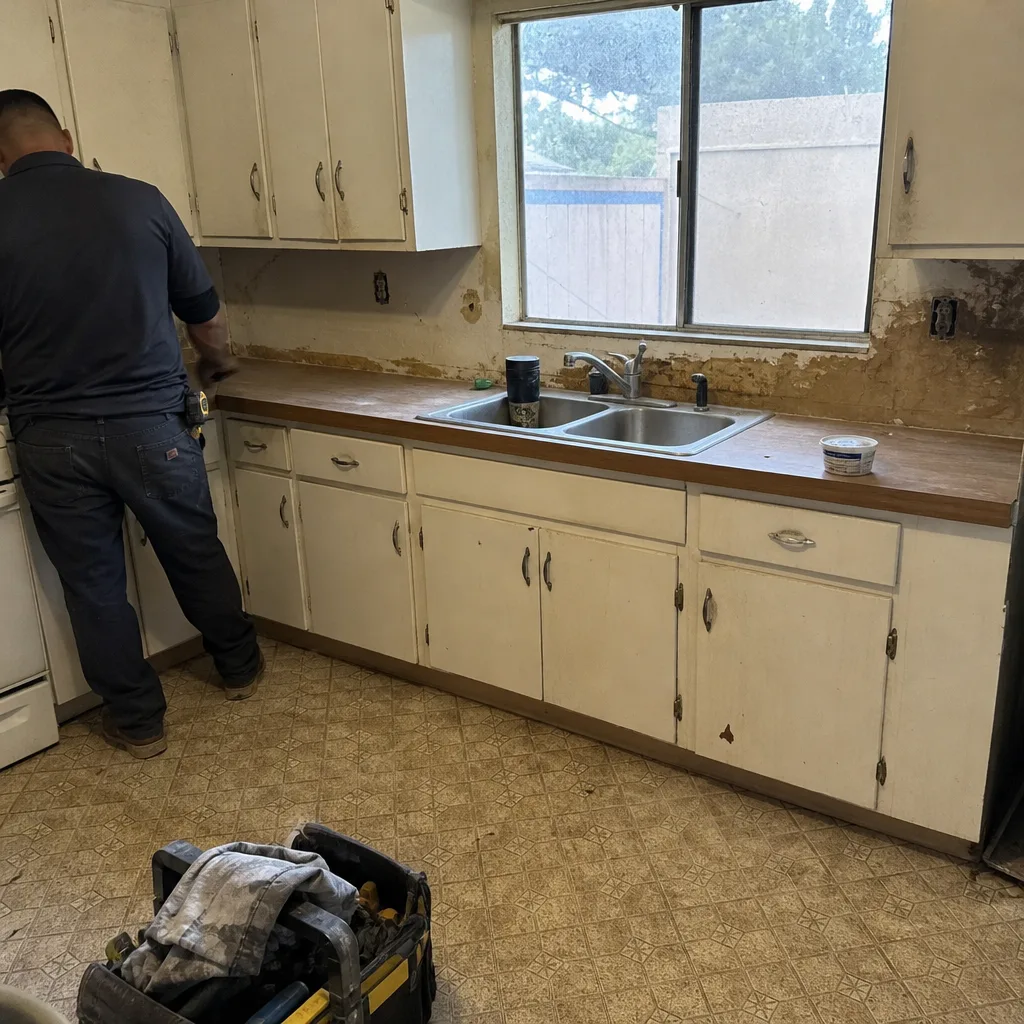 Before
 After
 Before
 After
 Before
 After
When to Call a Professional
Some paver problems are a homeowner’s job. Replacing a couple of cracked units, brushing back efflorescence, and cleaning a joint before re-sanding are all reasonable. The line is base failure, and it’s easy to spot. Call a professional when a whole section of the field is moving as a mass, when the string-line test shows a dip spanning several units, when edge creep has pushed the outer row, or when re-sanding has failed three times in a row. Excavation, base preparation, and compaction are work that needs the right equipment and the right moisture level for the soil, and getting it wrong is what set the original failure in motion. Construction Palmdale offers free estimates in Palmdale. Call (844) 320-6596. We answer 24/7. Fast dispatch from 7am to 7pm, Sunday through Friday.
Frequently Asked Questions
Typical estimated ranges in Palmdale start at the low hundreds for re-sanding or re-leveling a small area, and go higher for partial or full re-base work. The written line-item estimate sets the final price, and we quote per job. Call (844) 320-6596 for an exact quote – estimates are free.
It’s efflorescence, mineral salts brought to the surface by moisture moving through the concrete, and it’s almost always cosmetic. Clean it with a dry brush first, then a specialty remover for concrete pavers, but never with acid on natural stone. A pH-neutral cleaner is the right choice for stone.
In Palmdale, the pattern is wind scouring the joint top during the dry season, then a short intense rain washing out the loosened sand. Re-sanding without addressing joint depth and compaction won’t hold. When it’s been re-sanded several times without holding, the base has likely shifted and the field is no longer tight. Call (844) 320-6596 for an estimate.
No. We quote with a written line-item estimate and the price is fixed before work begins. If the scope changes because something unexpected turns up during excavation, that’s discussed and re-quoted before any work continues. Call (844) 320-6596 to schedule your free estimate.
Most driveway paver repair work doesn’t need a permit. New installation and anything involving grade changes or drainage tied to the property line may require one, and most cities require a permit for that kind of work, so ask your city’s building department and we’ll plan the scope around what’s needed. Call (844) 320-6596 to discuss the project.
A re-sand or a small re-level is usually a one-day job. A partial re-base takes a few days to excavate, rebuild the base, and re-set the pavers. A full driveway re-base is a longer project, and the written estimate lays out the schedule before work begins. Call (844) 320-6596 for a free estimate.
The Bottom Line
Most driveway paver failures in Palmdale are not random. They trace to three root causes: a base compacted at the wrong moisture, polymeric sand lost to wind and short intense rain, and edge creep from daily thermal expansion. The string-line test tells you whether you’re dealing with surface settling or base failure, and it’s the cheapest ten minutes in this guide. Local units, re-sanded joints, and a proper pinned edge restraint fix the first tier. A field moving as a mass needs excavation, and that’s the price jump. Read the warranty language before you sign the estimate, and look for covered causes, exclusions, and who does the repair. Diagnose first, then spend. That’s what saves the driveway.
If you’d rather have a trained eye confirm what you’re looking at, call (844) 320-6596 for a free estimate. We answer 24/7. Fast dispatch from 7am to 7pm, Sunday through Friday. Our technicians have up to 10 years of experience, and we’ll show you the options for the repair, the paver brand, and the edge system before any work starts.
Written by the team at Construction Palmdale.