
Last updated November 16, 2026
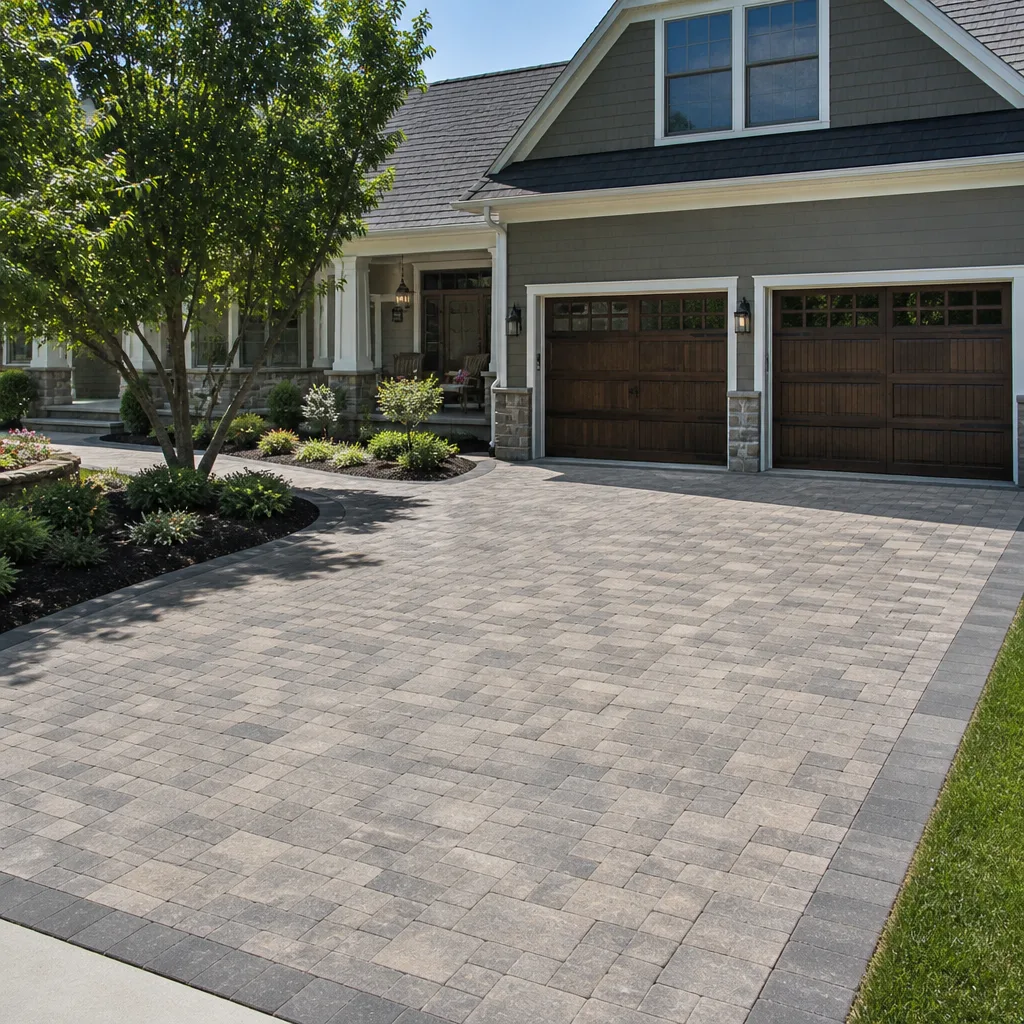 Driveway & pavers
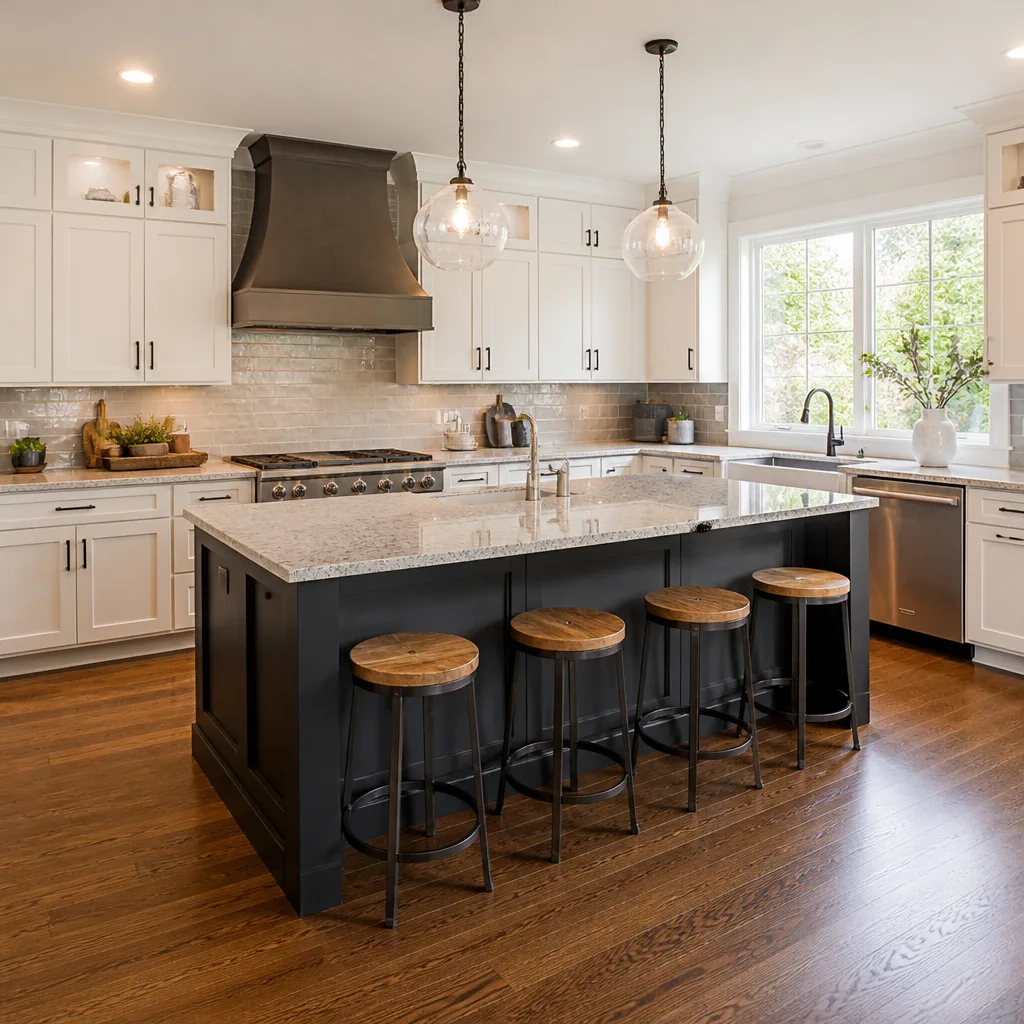 Kitchen remodeling
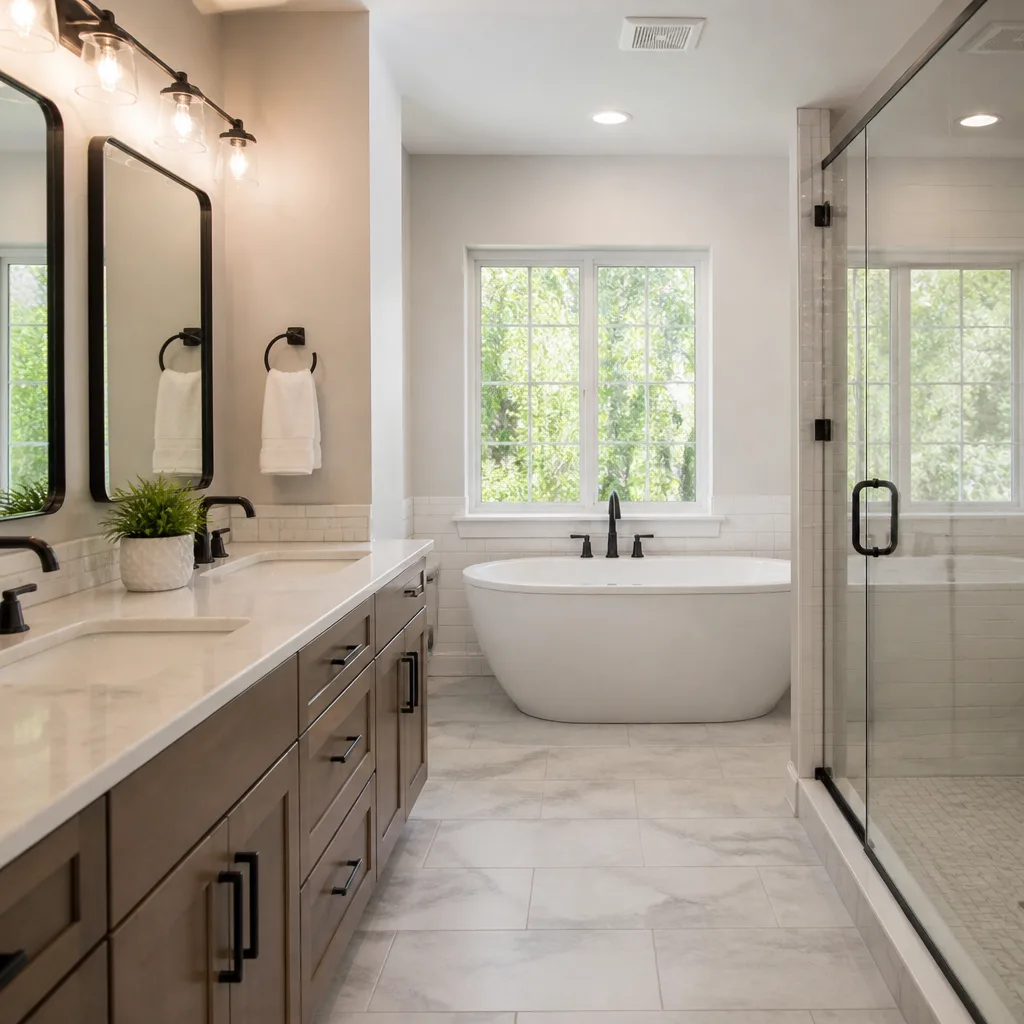 Bathroom remodeling
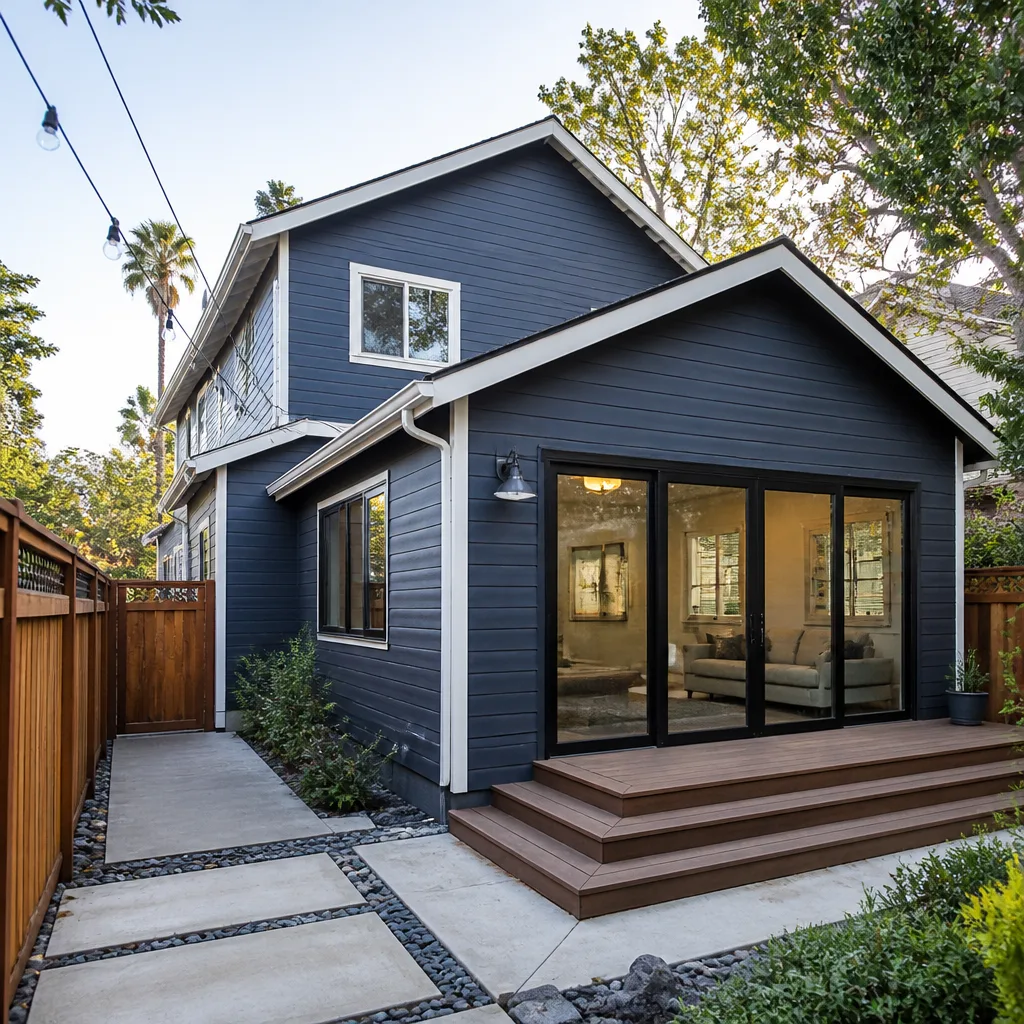 Home additions & ADU
 Roofing
 Windows & doors
 Fence
Free written scope consultation - allowances, timeline, and change-order rules on paper before a single trade is scheduled
The Complete Driveway & Pavers Guide for Palmdale Homeowners
Most California paver guides are written for the coast. Palmdale sits at 2,657 feet in the high desert, where summer ground temperatures can crack an improperly set concrete paver in its first season and winter nights drop below freezing often enough to move anything that wasn’t built for it. The material and base that work fine in Thousand Oaks will fail here. This guide starts where the coastal guides end: with what not to install in Palmdale, and the base prep and slope standards that decide whether a driveway lasts eight years or thirty. You’ll learn how each paver type handles our sun, soil, and drainage, how local supply affects lead times, and how to spec a job that holds up.
Quick Answer
A driveway in Palmdale needs a minimum 6-inch compacted aggregate base (not the 4-inch standard used in warmer Southern California markets), edge restraint on every exposed border, and a paver material rated for high UV and freeze-thaw movement. Concrete pavers from Belgard, Tremron, or Techo-Bloc are the most reliable choice here; natural stone and porcelain work in specific applications but demand tighter specs. Base prep and drainage, not the paver color, are what determine how long the driveway lasts.
Styles & brands we work with
- Kitchen remodeling
- Bathroom remodeling
- Home additions & ADU
- Roofing
- Windows & doors
- Driveway & pavers
- Fence
Table of Contents
- Why Palmdale’s Climate Changes the Paver Rules
- Material Comparison for High-Desert UV Exposure
- The 6-Inch Base Rule and Why It Matters Here
- Drainage Engineering on Hardpacked Desert Soil
- Alkaline Soil and Polymeric Sand Stability
- Brand Lines, Local Supply, and Lead Times
- What Pavers Cost in the Antelope Valley
- How a Proper Installation Works, Step by Step
Why Palmdale’s Climate Changes the Paver Rules
Palmdale gets more than 300 sunny days a year and over 20 nights below freezing annually. Those two facts together are the whole problem. Sun expands a paver’s surface during the day; a cold night contracts it. Repeat that daily and seasonally, and any weak link in the base, the joint sand, or the edge restraint shows up fast. On the coast, a four-inch base and a loose border might survive for a while because the temperature swing is small. In Palmdale it won’t.
The sun is its own stress. UV exposure at this elevation breaks down sealers, fades cheap pigments, and dries out joint sand faster than in lower, hazier markets. A paver that looks great on a showroom floor may chalk or dull within a couple of seasons if the pigment isn’t UV-stable. That’s not a cosmetic complaint; faded and brittle pavers also shed sand and loosen joints, which lets water in.
Then there’s the soil. Antelope Valley ground is typically alkaline and often hardpacked. It doesn’t absorb water the way coastal clay or loam does. During a heavy rain, water sheets across the surface until it finds a low spot. If the driveway wasn’t graded and edged to direct that water, it pools against the foundation or undercuts the pavers. In our experience, drainage mistakes cause more paver failures in Palmdale than material choice does.
So the local guide has to answer three questions in order: does the material survive the sun and the cold, does the base carry it, and does the water leave. Get those right and the driveway performs. Skip one and you’re back to repairs.
Material Comparison for High-Desert UV Exposure
Not every paver type belongs on a Palmdale driveway. Here’s how the three main families actually behave under our conditions.
Concrete Pavers
The workhorse for this climate. Manufactured concrete pavers from lines like Belgard and Tremron are dense, dimensionally consistent, and made with UV-stable pigments. They handle daily temperature swing well when installed on a proper base. Their weakness is cheap product: lower-grade pavers with weak cement content or thin color layers can spall (flake at the surface) after a few hard winters, and lighter colors show desert dust quickly. Buy a name brand with a published spec and you largely avoid this.
Porcelain Pavers
Excellent UV and stain resistance, and they don’t fade. Porcelain is also very dense and handles moisture well. The catch is that porcelain is rigid and less forgiving of base movement. On a driveway that takes vehicle loads and sees freeze-thaw cycling, it needs an even more carefully compacted base and often a different setting method than concrete pavers. It’s a strong choice for walkways and patios here; for a full driveway, confirm the installation method with your contractor before committing.
Natural Stone
Stone like travertine and certain sandstones look beautiful and hold color, but many natural stones are porous and absorb water. In a climate with freezing nights, water trapped in a porous stone expands when it freezes and can crack or pit the surface over time. Dense stones fare better; soft, absorbent ones are a gamble on a driveway. If you love the stone look, ask specifically how the chosen stone performs through freeze-thaw and whether it needs sealing.
- Most reliable for a Palmdale driveway: brand-name concrete pavers with UV-stable color.
- Best for patios and walkways: porcelain, installed to spec.
- Fades first: off-brand concrete with thin color layers.
- Heaves or pits first: porous natural stone on an under-built base.
The 6-Inch Base Rule and Why It Matters Here
The single biggest difference between a driveway that lasts and one that doesn’t is what’s under the pavers. In warmer Southern California markets, a 4-inch compacted aggregate base is common. In Palmdale, plan on a minimum 6-inch compacted base, and deeper where the subgrade is soft or the slope is steep.
Why the extra two inches? A thicker base spreads the load of a vehicle over more area and gives the pavement room to move slightly with temperature without disrupting the surface. It also lifts the pavers further from the moisture that can wick up from the soil. On a thin base, a single bad winter can create ruts and rocking pavers.
Compaction matters as much as depth. A 6-inch base that’s dumped and leveled but not compacted in lifts will settle unevenly. Proper work compacts the aggregate in layers, checks it for flatness, and gets the base tight before a single paver goes down.
- Excavate to the full depth: paver thickness, bedding sand, and the 6-inch base, plus whatever the slope requires.
- Grade the subgrade so water has somewhere to go.
- Lay and compact the aggregate in lifts until it’s dense and flat.
- Set edge restraint on every exposed border before laying pavers.
- Screen the bedding sand to a consistent depth, then lay, cut, and compact the pavers.
- Sweep in joint sand and compact again to lock the surface.
If a quote doesn’t mention base depth or compaction, ask. It’s the first thing to check. For the full breakdown of how this applies across the whole property, see our driveway & pavers service page.
Drainage Engineering on Hardpacked Desert Soil
Palmdale’s soil doesn’t soak up rain the way most people assume. Hard, dry ground sheds water quickly, and the occasional heavy rain turns into sheet flow across a flat driveway and straight toward whatever sits downhill – often the garage or the house. Standard driveway jobs that skip drainage design here are asking for a wet foundation.
The fix is grade and restraint, planned before excavation. The driveway needs a slope that moves water off the surface and away from the structure, whether that’s toward the street, a swale, or a drainage channel. The exact grade gets set to the site; what matters is that it’s designed, not eyeballed.
Edge restraint is the second half. Every exposed border of the driveway needs a fixed edge – a concrete curb or a manufacturer’s edge system – pinned in place. Without it, the pavers spread outward over time under load and temperature, joints open, and the whole surface loosens. On hardpacked desert soil, water that reaches an unrestrained edge will also erode the sand beneath.
- Plan slope so water leaves the surface and moves away from the house.
- Use fixed edge restraint on every exposed border, pinned into the base.
- Direct runoff to the street, a swale, or a channel – never against the foundation.
- Check the transition where the driveway meets the garage apron so water doesn’t sit there.
This is also why we treat hardscape, fencing, and the roof as one exterior plan rather than separate jobs. One team from the roof to the driveway means the water that leaves your roof has a planned path that doesn’t end at your new pavers.
Alkaline Soil and Polymeric Sand Stability
Antelope Valley soil runs alkaline, and that affects the sand that locks your pavers together. Polymeric sand fills the joints between pavers and, once it sets, keeps them from shifting and blocks water and weeds. But not every formulation is built for high-pH soil. A sand that isn’t rated for it can break down, soften, or wash out over a few seasons, and when the joints fail, the pavers start to move.
When you compare quotes, ask which polymeric sand the contractor plans to use and whether it’s specified for alkaline conditions and freeze-thaw movement. The good formulations are made to handle both. Skipping that step is one of the quiet reasons Palmdale driveways start looking shabby early.
Joint sand isn’t a one-time thing, either. Over years, sun and traffic work sand out of the joints. A periodic top-up keeps the surface tight. It’s an easy, low-cost part of owning a paver driveway, and it’s a lot cheaper than resetting pavers.
What to Check on Sand
- Rated for high-pH soil – confirms it holds up in alkaline ground.
- Freeze-thaw rated – flexes instead of cracking when temperatures drop.
- Applied and compacted properly – the sand only works if it’s worked into the joints fully.
Brand Lines, Local Supply, and Lead Times
Brand choice affects more than looks – it affects whether the pavers actually show up on schedule. Some concrete paver lines are stocked regionally and available quickly; others have to be special-ordered with longer lead times. Knowing the difference before you sign keeps a project from stalling halfway through.
We source from a roster of established hardscape manufacturers, including Techo-Bloc and Tremron, plus other major paver lines. Each has its own catalog of shapes, colors, and finishes, and each publishes product specifications. That matters here, because a spec sheet tells you how a paver is rated for strength, water absorption, and freeze-thaw – exactly the criteria that separate a good high-desert paver from a cheap one.
Lead time is where supply gets real. A popular line in a common color can be ready in a few weeks. A specialty shape in a less-common color may take longer, and that has to be planned into the schedule. If a contractor promises a fast start on an unusual paver, ask where the product is coming from.
This is the same material-first approach we take across every project. Whether it’s pavers, roofing systems, or cabinet lines, the goal is to choose the material, not just the contractor. Comparing brand specs side by side is how you avoid settling for whatever happens to be in stock. If you’re also planning the rest of the yard, our fence installation work pairs naturally with a new driveway so the whole exterior reads as one design.
What Pavers Cost in the Antelope Valley
Pavers are priced per square foot, and the number moves with material, base depth, site access, and how much cutting and shaping the design requires. Rather than quote a single figure, here’s how the ranges break down. These are typical estimates; the written estimate sets the final price.
- Concrete pavers, standard pattern: the most economical tier, priced lower per square foot than premium lines.
- Concrete pavers, premium brand and complex pattern: higher per square foot for larger-format, textured, or specialty shapes.
- Porcelain or natural stone: priced at the premium tier, plus a method-specific install cost.
- Base excavation and 6-inch compacted base: priced as part of the job; deeper excavation or hauling adds cost.
- Edge restraint, cutting, and drainage: itemized in the estimate, not buried in a per-foot number.
What drives the total more than the paver itself is the prep. A driveway that needs deeper excavation, added drainage, or extra cutting for a curved design costs more than a simple rectangle on flat ground. A written, line-item estimate should show each of those pieces so you can see where the money goes.
How to Compare Two Quotes
- Check the base depth. A 4-inch base quote is not the same job as a 6-inch base.
- Check the edge restraint. Is it itemized, or assumed?
- Check the drainage plan. Is the slope designed and is runoff addressed?
- Check the sand spec. Alkaline- and freeze-thaw-rated, or generic?
- Check the brand and lead time. Named product, confirmed availability.
Call (844) 320-6596 for a written, line-item estimate you can compare line by line. Estimates are free.
How a Proper Installation Works, Step by Step
A driveway built to last in Palmdale follows the same sequence every time. It’s not complicated, but every step matters, and skipping any one of them is where problems start.
- Site review and measurements. We look at the existing surface, the slope of the ground, where water collects, and how the driveway connects to the house and street.
- Design and material selection. You choose the paver line, pattern, and color from the available brands, and the design accounts for drainage and any curves or borders.
- Excavation. We remove the old surface and dig to the full depth required for base, bedding, and pavers.
- Grading and drainage. We shape the subgrade so water has a planned path away from the house.
- Base installation. Aggregate goes down and is compacted in lifts to a minimum 6 inches.
- Edge restraint. Fixed edge systems are set and pinned on every exposed border.
- Laying the pavers. Pavers are set on screeded bedding sand, cut to fit, and compacted.
- Joint sand and final compaction. Rated polymeric sand is swept in and compacted to lock the surface.
Most residential driveways take several days to a couple of weeks depending on size, access, and material lead time. We confirm the schedule in the estimate so you know what to expect. For homeowners planning a bigger transformation – a new approach, a garage conversion, or a separate unit – our home additions & ADU work pairs with hardscape so the driveway and structure are planned together, one team on one timeline.
Common Mistakes to Avoid
- Using the coastal 4-inch base. A base built for mild coastal temperatures won’t hold up through Palmdale’s cold nights. Insist on a minimum 6-inch compacted aggregate base.
- Skipping edge restraint. Pavers without a fixed border spread and shift over time, and water erodes the sand beneath. Every exposed edge needs restraint pinned into the base.
- Ignoring drainage on hardpacked soil. Palmdale’s dry ground sheds water toward the house instead of absorbing it. A driveway with no planned slope sends runoff into the garage or foundation.
- Buying off-brand concrete with weak pigment. Cheap pavers fade and spall early under the desert sun. A named line with a published spec is worth the difference.
- Using generic polymeric sand. Sand that isn’t rated for alkaline soil and freeze-thaw can break down in a few seasons, and the joints fall apart with it.
- Special-ordering without checking lead time. An unusual color or shape can delay the whole project. Confirm product availability before the schedule is set.
- Choosing a contractor who quotes a per-foot price with no line items. You can’t compare prep, drainage, and sand specs you never see. A written, line-item estimate is the only way to know what you’re buying.
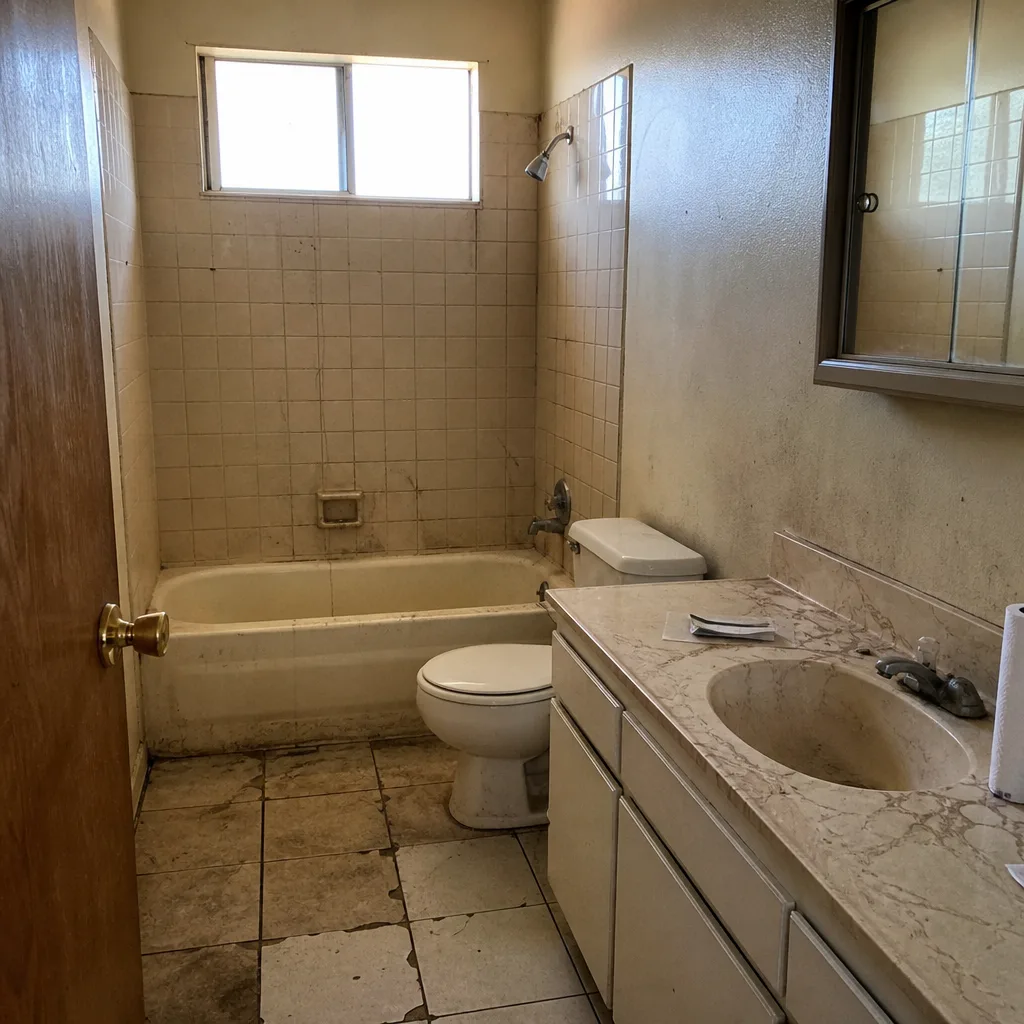
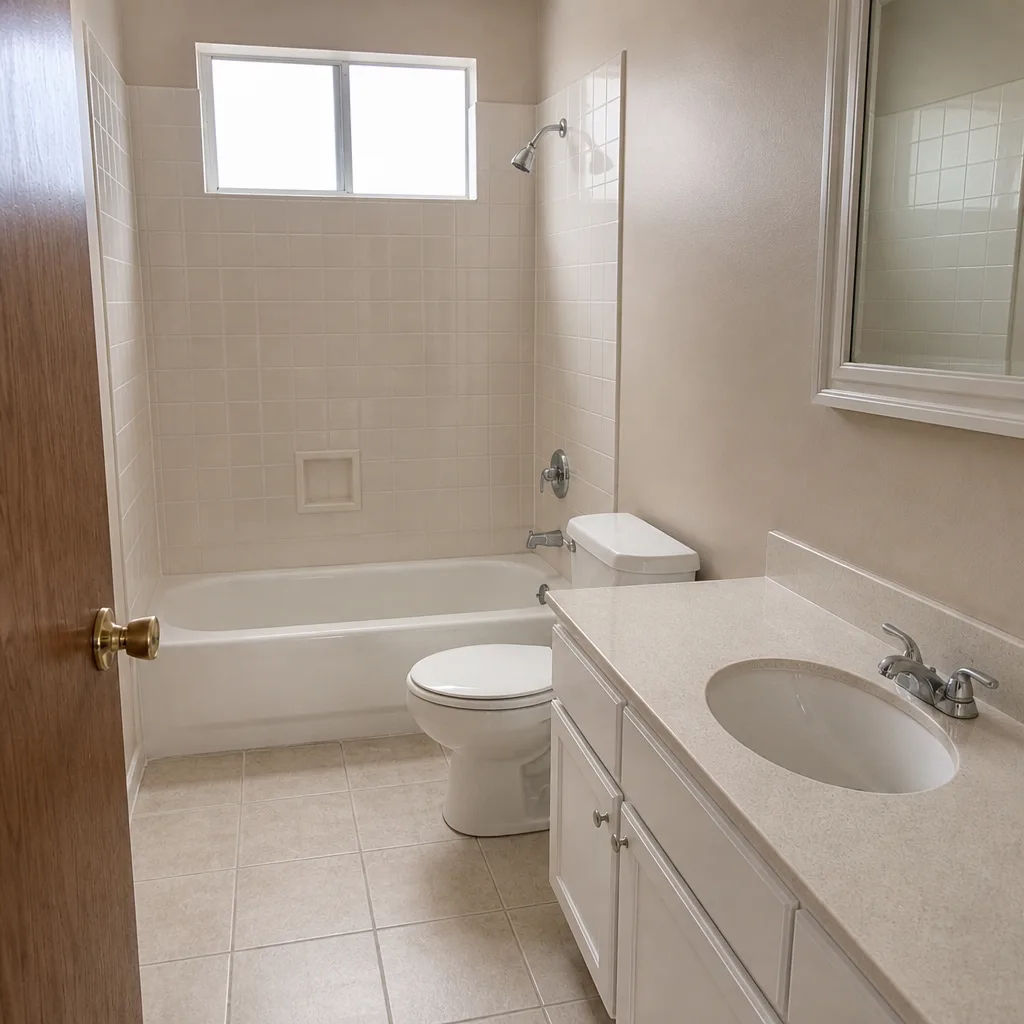
See the difference
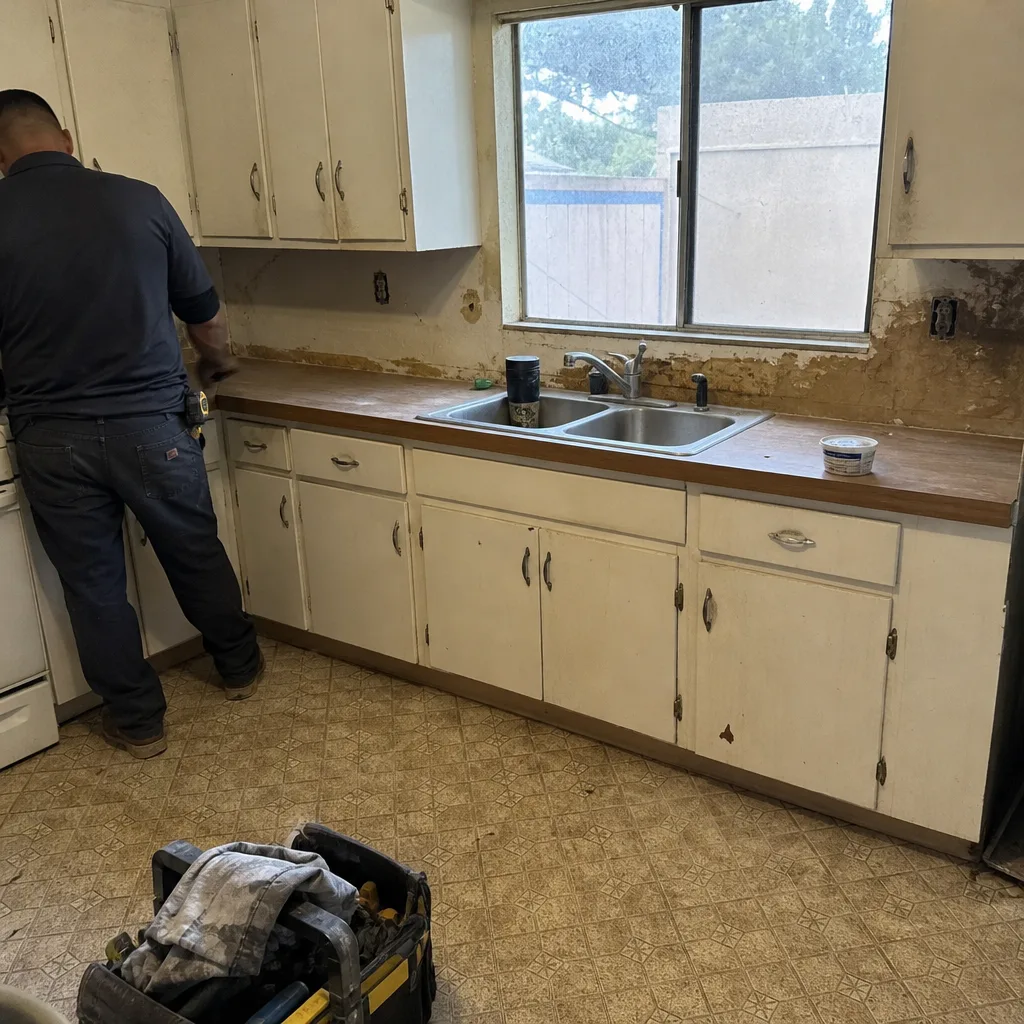 Before
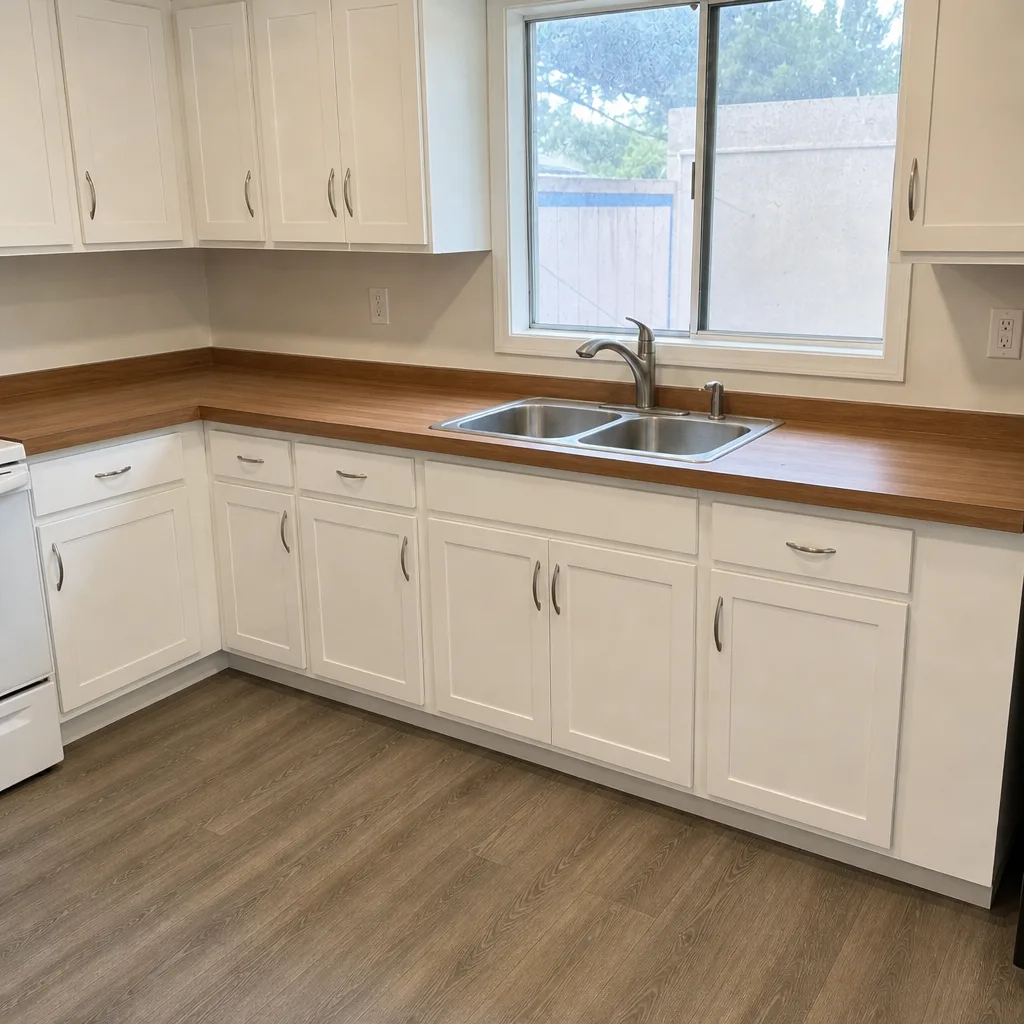 After
 Before
 After
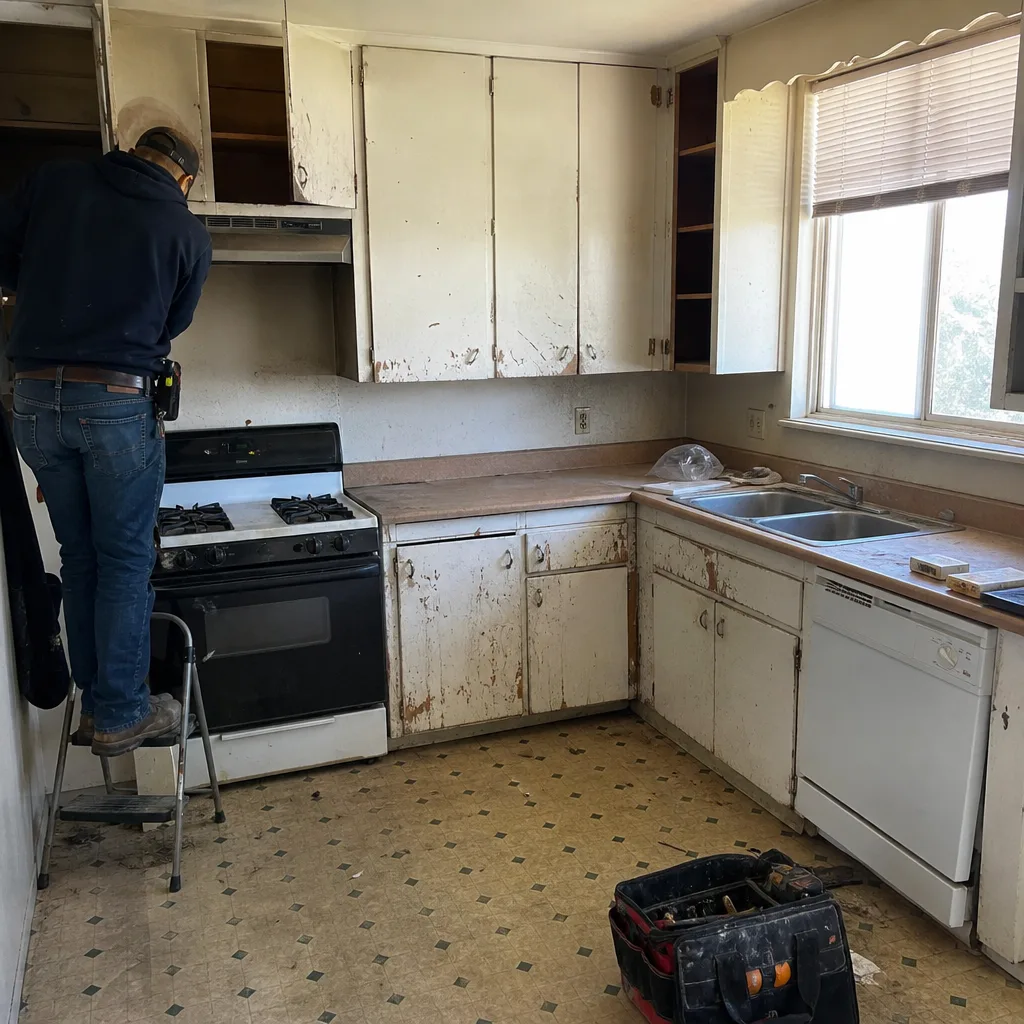 Before
 After
When to Call a Professional
Some paver work is a weekend project. A driveway in Palmdale isn’t. When the job involves excavating and compacting a 6-inch base, designing slope on hardpacked soil, setting edge restraint, or repairing pavers that have already heaved, shifted, or lost their joint sand, the base and drainage work is what decides the outcome, and that’s skilled work. If you’re comparing materials, weighing porcelain against concrete, or need a written line-item estimate to understand your options, a conversation is the fastest way to sort it out.
Construction Palmdale offers free estimates in Palmdale. Call (844) 320-6596. We answer 24/7. Fast dispatch from 7am to 7pm, Sunday through Friday. Our technicians have up to 10 years of experience, and we’ll walk you through the brands and specs so you choose the material, not just the contractor. When you’re ready for the next phase, it’s the same team from the roof to the driveway.
Frequently Asked Questions
Brand-name concrete pavers are the most reliable choice for a Palmdale driveway because they hold up to the sun and the cold nights when installed on a proper base. Lines from Techo-Bloc, Tremron, and other established manufacturers publish specs for strength, water absorption, and freeze-thaw, so you can confirm the product suits the climate. Porcelain and natural stone work well in some applications but demand tighter installation specs. Call (844) 320-6596 for a free estimate and a side-by-side comparison.
Plan on a minimum 6-inch compacted aggregate base in Palmdale, deeper where the ground is soft or the slope is steep. The 4-inch base common in warmer Southern California markets is too thin to handle the region’s freeze-thaw cycling and vehicle loads together. Compaction matters as much as depth, so the base needs to go down in compacted lifts. Call (844) 320-6596 to have your site evaluated and get an exact scope.
Quality concrete pavers with UV-stable pigments hold their color well, but cheap off-brand pavers with thin color layers can fade, chalk, or spall under more than 300 sunny days a year. The paver’s density and cement content matter too. Buying a named product with a published spec is the way to avoid early failure. Call (844) 320-6596 to review which lines are available and how they perform here.
Loose joints and weeds usually mean the polymeric sand has broken down or washed out, often because the sand wasn’t rated for alkaline soil and freeze-thaw movement. Once the joints open, pavers shift and water gets in. The fix starts with the right rated sand and a re-set of the affected area. Call (844) 320-6596 for an assessment and a free estimate on the repair.
Most residential driveways take several days to a couple of weeks, depending on size, site access, and material lead time. Excavation, base compaction, and edge restraint take real time, and rushing those steps is how driveways fail early. The written estimate confirms your schedule before work starts. Call (844) 320-6596 to get yours.
No change orders, and the written estimate sets the final price in our pricing approach. We itemize the base, edge restraint, drainage, sand, and materials so you can compare quotes line by line, and any variation in scope gets agreed before it happens. Call (844) 320-6596 for a free written estimate. We answer 24/7.
The Bottom Line
A paver driveway in Palmdale succeeds or fails on what you can’t see. The minimum 6-inch compacted base, fixed edge restraint, planned drainage on hardpacked soil, and correctly rated polymeric sand do more for longevity than any color or pattern. Brand-name concrete pavers are the safest material choice here, and porcelain and natural stone need tighter specs. The written, line-item estimate is where you confirm all of it before work starts. Choose the material, not just the contractor, and plan for the next phase with the same team. Call (844) 320-6596 for your free estimate.
Written by the team at Construction Palmdale.