
Last updated November 16, 2026
 Home additions & ADU
 Kitchen remodeling
 Bathroom remodeling
 Roofing
 Windows & doors
 Driveway & pavers
 Fence
Free written scope consultation - allowances, timeline, and change-order rules on paper before a single trade is scheduled
Construction Warning Signs: A Palmdale Homeowner’s Reference Guide
A diagonal crack above a door frame in a coastal home is usually a settling crack. The same crack in a Palmdale home near a caliche shelf boundary can point to differential foundation movement. Same symptom, entirely different urgency and repair path. That distinction is what makes reading your own house a skill worth learning, especially here, where soil movement, UV degradation, and thermal expansion run harder than in most of Southern California. This guide teaches you to read the specific warning signs a Palmdale house gives you, from stucco and roof to flatwork and fasteners, so you know what’s cosmetic, what’s a moisture signal, and what needs a professional assessment.
Quick Answer
Most construction warning signs in Palmdale fall into three groups: structural movement (cracks that follow soil and foundation behavior), moisture migration (efflorescence, stains, sticking doors), and material fatigue (UV-driven roof wear, failed coatings, rusted fasteners). A sign is serious when it’s new, growing, or paired with another symptom on the same wall or in the same room. Isolated cosmetic wear is common in the high desert and doesn’t mean your house is failing.
Styles & brands we work with
- Kitchen remodeling
- Bathroom remodeling
- Home additions & ADU
- Roofing
- Windows & doors
- Driveway & pavers
- Fence
Table of Contents
- How to Tell Cosmetic Stucco Crazing from a Structural Crack
- What Low-Slope Concrete Tile Roof Wear Looks Like in Palmdale’s UV
- Why Efflorescence on Block Walls Is a Moisture Signal
- Fastener Rust Patterns on Patio Covers and Pergolas
- Interior Clues That Start Outside the House
- Reading Dips and Cracks in Driveways and Pavers
- Fence Leaning and Post Rot After High Desert Temperature Swings
- When to Call a Professional
How to Tell Cosmetic Stucco Crazing from a Structural Crack
Stucco crazing is the fine network of hairline cracks you see across the surface of a wall, almost like the skin of a dried riverbed. It’s normal. It comes from the material curing and from a decade of daily thermal cycles. If those fine cracks are spread evenly across a large wall, that’s a surface issue, and the fix is patch and paint. Structural cracks behave differently. They follow a line, they widen, and they usually start or end at a stress point in the building.
Three things to look at tell you which one you’re dealing with:
- Direction. Vertical and horizontal cracks that run straight along a wall are usually settling or expansion joints doing their job. Diagonal cracks that move at roughly 45 degrees are the ones worth photographing, because they typically follow stress from below.
- Location relative to openings. Cracks that ladder down from the top corner of a window or door and continue at an angle toward the ground are a movement pattern. Cracks that stay put near the middle of a solid wall are rarely structural.
- Soil zone. Palmdale sits over areas with caliche, a cement-like layer that expands, contracts, and shifts unevenly with moisture. A house near a caliche shelf boundary shows different movement than a house on deeper alluvial soil. If you’ve seen grading or digging nearby that changed how water drains around your lot, watch your diagonal cracks closely for a season.
A single diagonal crack above a window that hasn’t changed in years is often benign. The same crack getting wider between seasons, or appearing on two opposing walls at once, deserves an assessment. On the way, keep our Construction Palmdale exterior envelope notes handy; cracks in stucco frequently come with failing caulk joints and window seals that let our occasional monsoon moisture in.
What Low-Slope Concrete Tile Roof Wear Looks Like in Palmdale’s UV
Concrete tile is dense and heavy, and it sheds our dry heat well. But the desert sun is relentless, and it doesn’t just fade tile; it ages everything under and around it. The visible roof is only the top of the system. When you look up, you’re seeing the tile, not the underlayment and fasteners doing the real weatherproofing below.
What to actually check from the ground and from a safe vantage point at the eaves:
- Granule loss. New concrete tile has a textured, grit-like face. When the surface turns smooth or pale and you’re finding grit in your gutters or at the base of downspouts, the tile face is breaking down under UV. This doesn’t instantly mean a leak, but it means the tile has less protection, so the underlayment timeline matters more.
- Lifted or slid ridges. Ridge tiles that sit slightly out of line after a hot season are common as fasteners loosen. If you see daylight through a ridge gap, or a ridge tile visibly tipped, water gets in behind it.
- Dark bands and staining. Streaks running downhill are usually dirt washed off, not failure. But dark, damp-looking bands that don’t dry after warm days are worth noting.
- Sagging or soft spots under the tile. If the line of your roof visibly dips, something supporting the tile has weakened.
Age is the biggest factor. Tile roofs here can look fine on top while the underlayment beneath is near the end of its useful span, and that underlayment is what actually keeps water out. Our roofing service walks a Palmdale roof looking at both layers, because replacing tile because the underlayment failed wastes money.
Why Efflorescence on Block Walls Is a Moisture Signal
Efflorescence is the white, powdery bloom that shows up on concrete block, retaining walls, and fence columns. A lot of homeowners treat it as a stain to power-wash off. It’s actually salt migrating from inside the masonry to the surface, carried by water. When water moves through block, it dissolves salts in the concrete and carries them out as it dries. The bloom is the outcome of that migration.
That’s why getting rid of the white stuff doesn’t solve anything if the moisture source is still active. There are two common paths water takes into a Palmdale block wall:
- Grading and drainage. Water pooling against the base of a retaining wall or block fence after a storm pushes through the block and wicks upward. If you can see a water line or a wet zone at the base after rain, the drainage at the top of the wall or along the property line needs attention.
- Failed surface protection. Block is porous, and block walls that were never sealed, or whose sealant has aged out under UV, let moisture in from all sides. The bloom, drying pattern, and where the salts concentrate all point to the source.
Where the bloom keeps returning after cleaning, or keeps showing up on one section of wall and not others, treat it as a drainage and moisture question, not a cleaning question. The same logic applies to block retaining walls holding back a slope. A wall that’s holding back water shows the bloom at its face and sometimes a slight lean. Exterior moisture that’s active long enough also starts showing up inside the house, which is why exterior-envelope work is worth doing cohesively. That’s the thinking behind single-contractor accountability from the roof down to the driveway edge.
Fastener Rust Patterns on Patio Covers and Pergolas
A patio cover in Palmdale lives a hard life. Metal expands on a 105-degree afternoon and contracts by 30 degrees or more that night, every day of summer. That daily flex works on fasteners and joints. When the hardware goes, the structure’s weather resistance goes with it.
The color and pattern of the rust tells you how far the problem has gone:
- Light surface bloom on the hardware head. Cosmetic oxidation. Clean and monitor. Not a structural concern.
- Rust streaking down from every fastener in a line. The galvanized coating on those fasteners has broken down. Galvanizing is what stops rust, so when the coating fails, the fastener starts losing section inside the wood or steel it’s holding.
- Rust bleeding from a welded joint or a bolted connection. This is the higher-priority pattern. A bolted connection that’s rusting from the inside out can look fine while it’s losing holding power. If the joint shows rust in a streak and the bolt turns freely by hand, that connection has likely loosened.
- Rust along the base where the post meets concrete. The bottom of a post sits in the most moisture-rich zone and endures the most heat. Water trapped at the base accelerates corrosion and, in wood posts, rot. Push a screwdriver into the post bottom an inch or two. If it sinks, that’s failure, not surface rust.
The practical Palmdale rule: rust concentrated at fasteners in a repeating line or at joints earns a closer look, and rust at post bases earns a look if there’s any softness or movement. Hardware is small, so a lot of people ignore it until a cover shifts in a wind event.
Interior Clues That Start Outside the House
A lot of what looks like an interior problem started on the outside of the house weeks ago. The three interior signs that map most reliably to exterior failure are ceiling stains, sticking doors, and gaps at baseboards. Each one is a signal, not a diagnosis, but they tell you where to look outside.
Ceiling stains. A ring or irregular stain on a ceiling near an exterior wall or under a roof plane typically means water has gotten in above. The shape matters. A ring that keeps expanding after a storm has an active leak path. A stain with defined darker edges that doesn’t change after dry weather may be a past event whose source was fixed, or one that dried between events. Look at the wall on the other side of that exterior corner, and at the roof plane above it.
Door jamb sticking. A door that used to close cleanly and now binds at the top or scrapes along the latch side is usually moving because the frame around it is moving. In a high desert house, that can be wood swelling from a moisture source at the exterior, or movement in the framing. If the sticking comes and goes with the seasons, moisture is the likely driver. If it’s persistent and getting worse, that’s worth a structural look.
Baseboard gaps. A gap that opens between the baseboard and the wall, or between the baseboard and the floor, means the two surfaces have moved apart. Small seasonal gaps are normal. Gaps that open quickly, widen, or appear with a corresponding diagonal stucco crack on the outside of that same wall are the pattern that connects interior to exterior.
Interior damage that keeps coming back usually means the outside wasn’t addressed, so the sooner you trace it to the exterior, the cheaper the repair. If you’ve scoped a bathroom or kitchen remodel in a room with these symptoms, fix the envelope first; our bathroom remodeling notes spell out why new finishes over a moisture problem just hide it. If the movement suggests a larger structural issue, that’s the point to have a professional assess it. If the house is tight and you’re planning a larger project, that’s a good time to look at home additions & ADU options in a way that also corrects the existing envelope.
Reading Dips and Cracks in Driveways and Pavers
Concrete and pavers in Palmdale deal with two things most flatwork guides never mention: caliche and the dry-wet swing of our storms. A driveway that’s slightly dipped isn’t automatically failing, and a hairline crack in a pavement joint isn’t either. What matters is where the dip sits and how the crack pattern develops.
How to read your flatwork, from lowest concern to highest:
- Hairline cracks that run along a control joint. That’s the joint doing its job. Normal, and the right place for a crack to live.
- A slight dip that’s even and slow, away from the house. Surface settlement. Should be watched seasonally, not panicked over.
- A dip toward the house at a wall or foundation line. Water may now be draining toward the structure, and any movement near the foundation is more significant than movement out in the open.
- Cracks that widen into a V or off-step (one side higher than the other). Differential movement. If it’s at a driveway edge, a step, or a patio slab near the house, it’s worth an assessment.
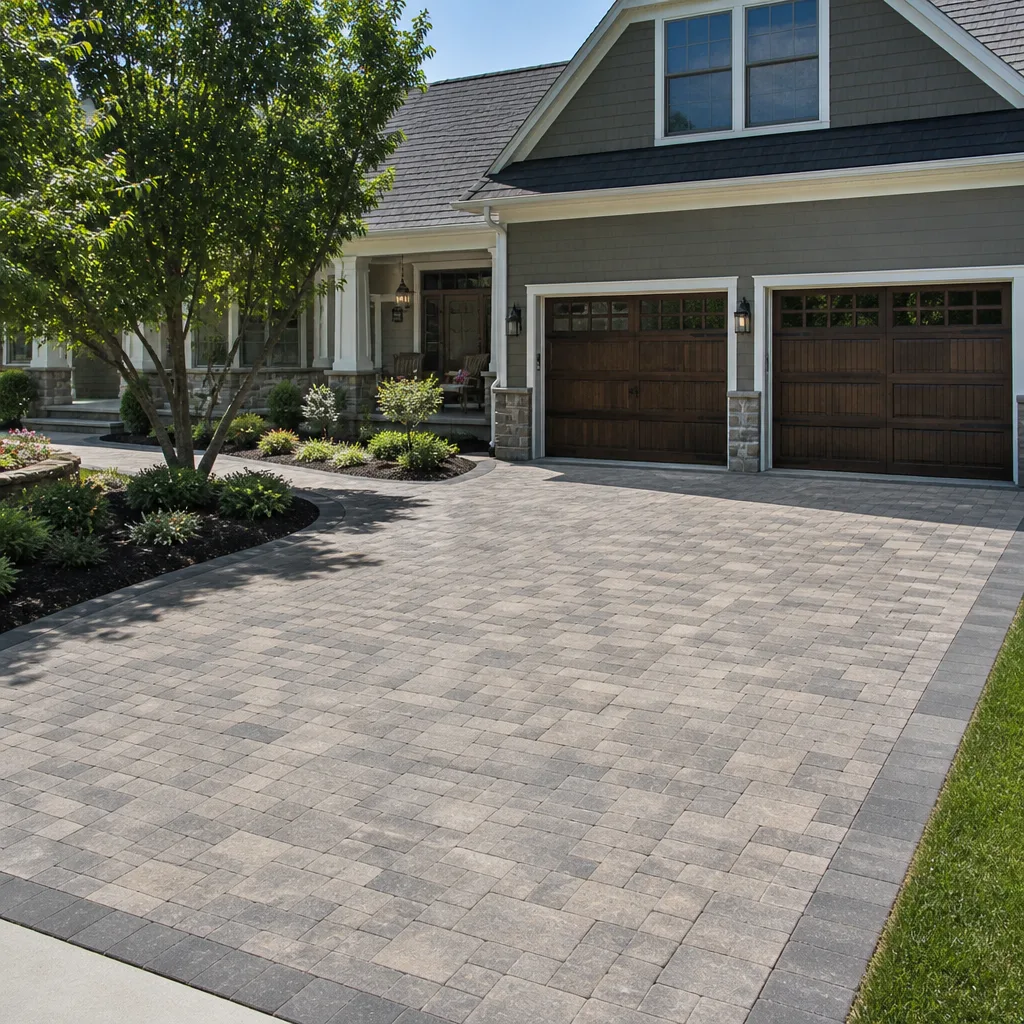
Paver driveways show it differently. Settled pavers mean the sand joints open up and pavers shift or rock. Shifting near a garage apron or threshold is the highest-concern pattern. Brand-name pavers like Belgard give you deep design catalogs and product guarantees, but the install base under them is what keeps them flat. A settled paver field often points to the base layer, not the paver itself.
Fence Leaning and Post Rot After High Desert Temperature Swings
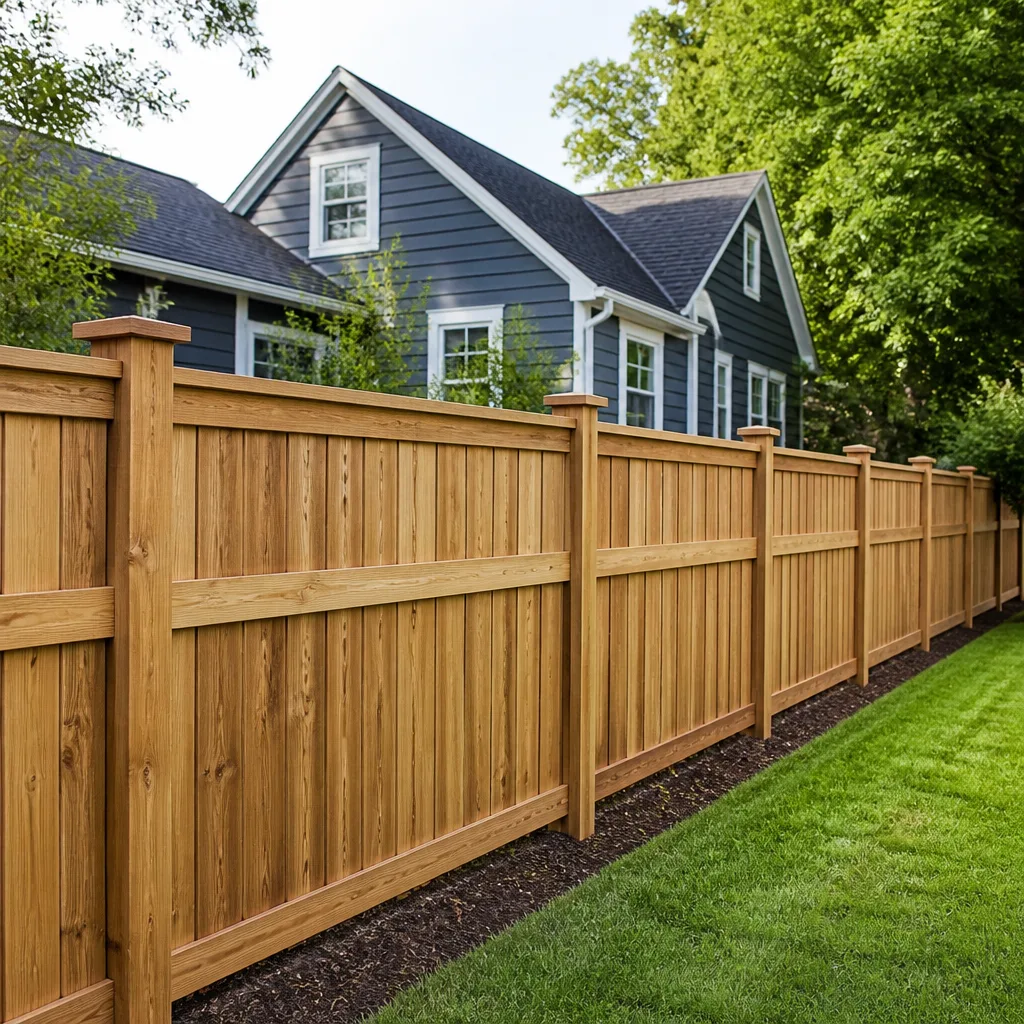
A fence that leans slightly after a hot summer and then straightens with the cool is showing thermal movement, and that’s normal. A fence that leans and stays leaning has a post problem. Posts fail at the base first, and Palmdale’s climate makes that base a busy place: hot days, cool nights, and the occasional heavy rain that softens soil around the post footing.
Check these in order:
- Post base condition. At the ground line, look for cracked or splintered wood, soft spots, and any wobble when you push the post. Rocking at the base is the clearest sign the footing has loosened.
- Leaning direction. A fence line leaning the same way in a run suggests soil or footing failure. A single post leaning out of line is usually local.
- Material differences. Vinyl fences in lines like Bufftech and ActiveYards hold their shape in heat better than wood, but an unsupported long run can bow over time. Aluminum fencing like Jerith resists rot entirely, so when a metal fence leans, it’s almost always the post footing.
- Rust and rot at attachments. Rusted hinges and rail brackets tell you the fence has been wet at those points.
A leaning fence sits on the exterior-envelope side of the same conversation: it’s usually a soil and moisture issue at the base, not a material failure in the panel. When a fence must come out, our fence installation process covers footing and material choices for Palmdale conditions.
See the difference
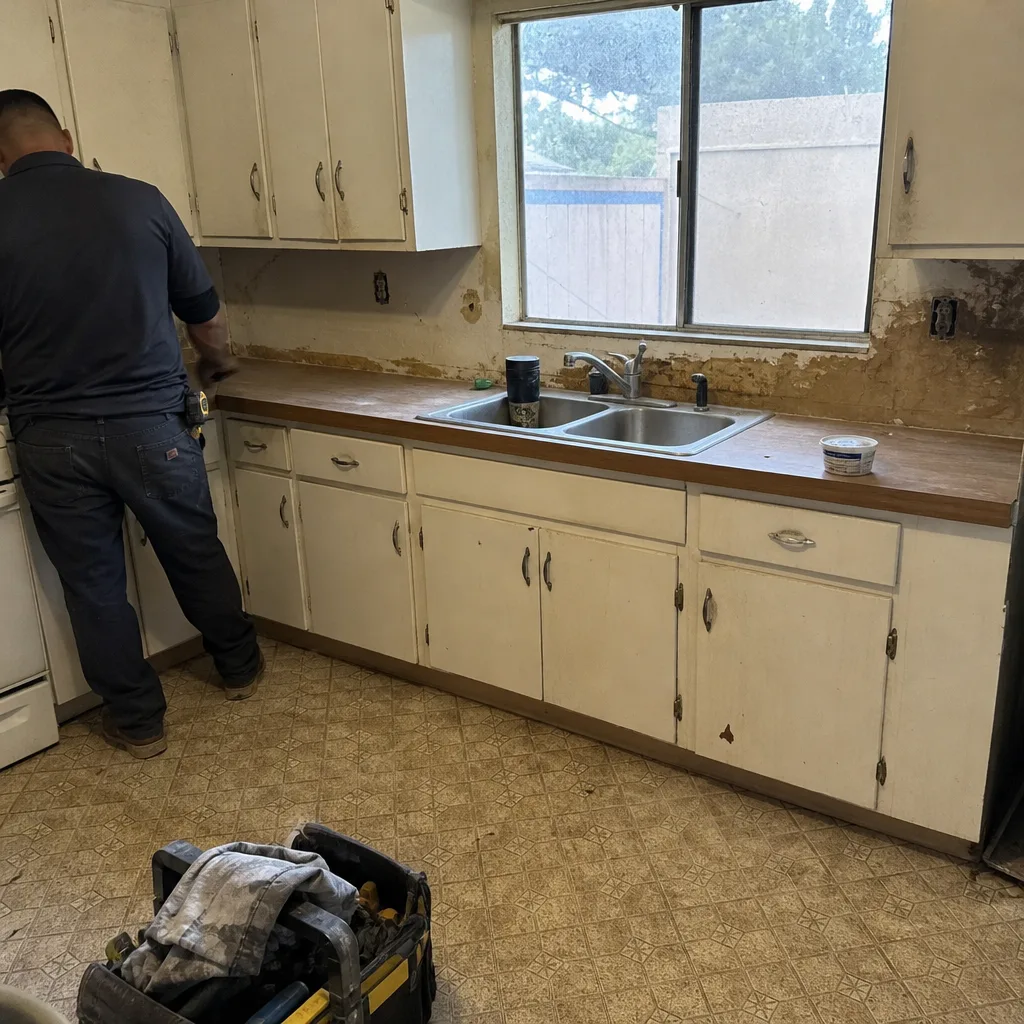 Before
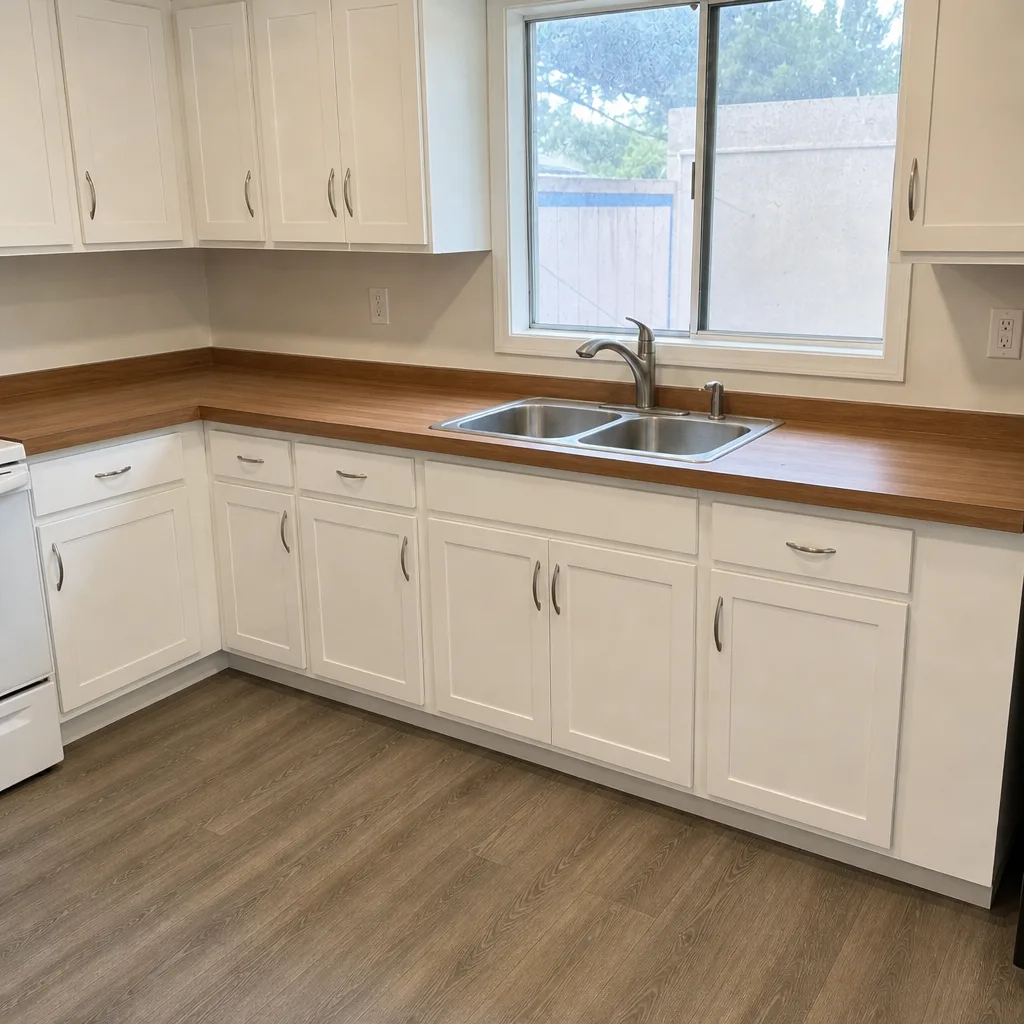 After
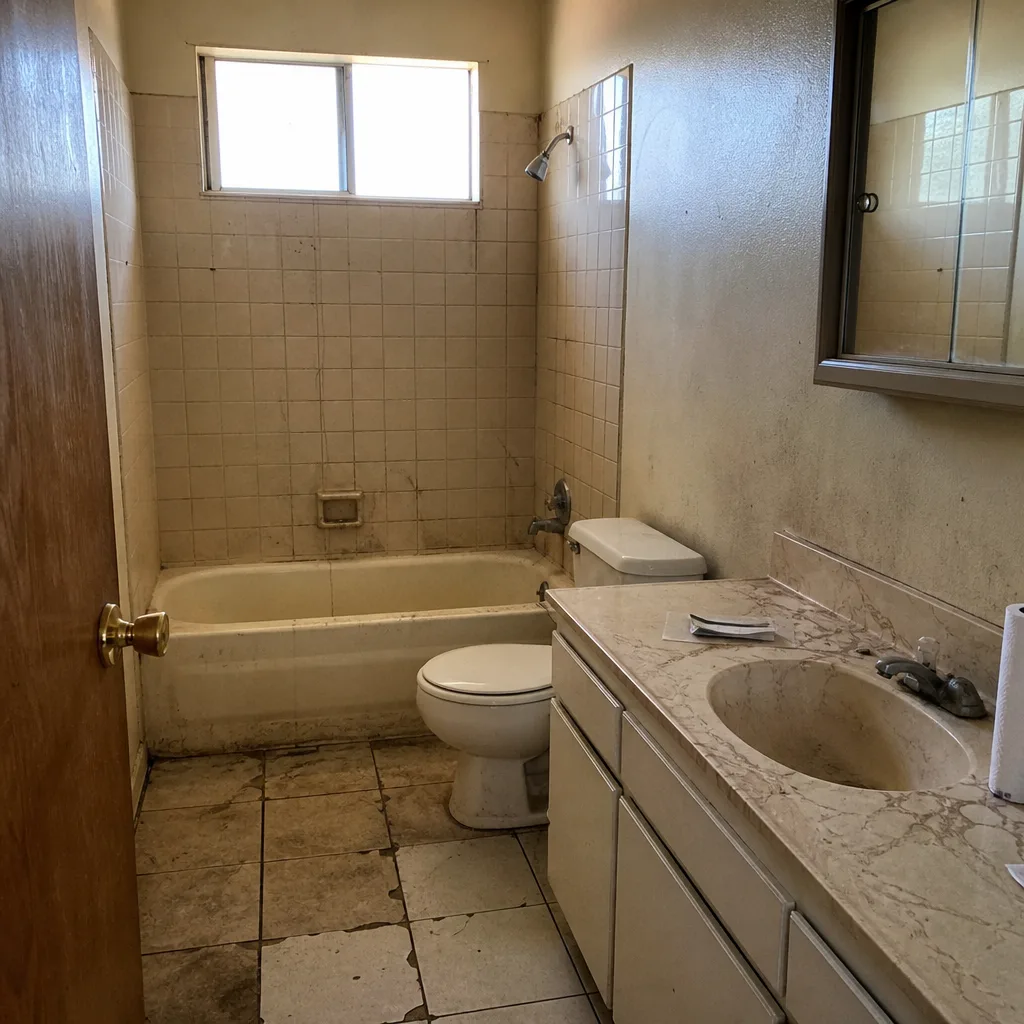 Before
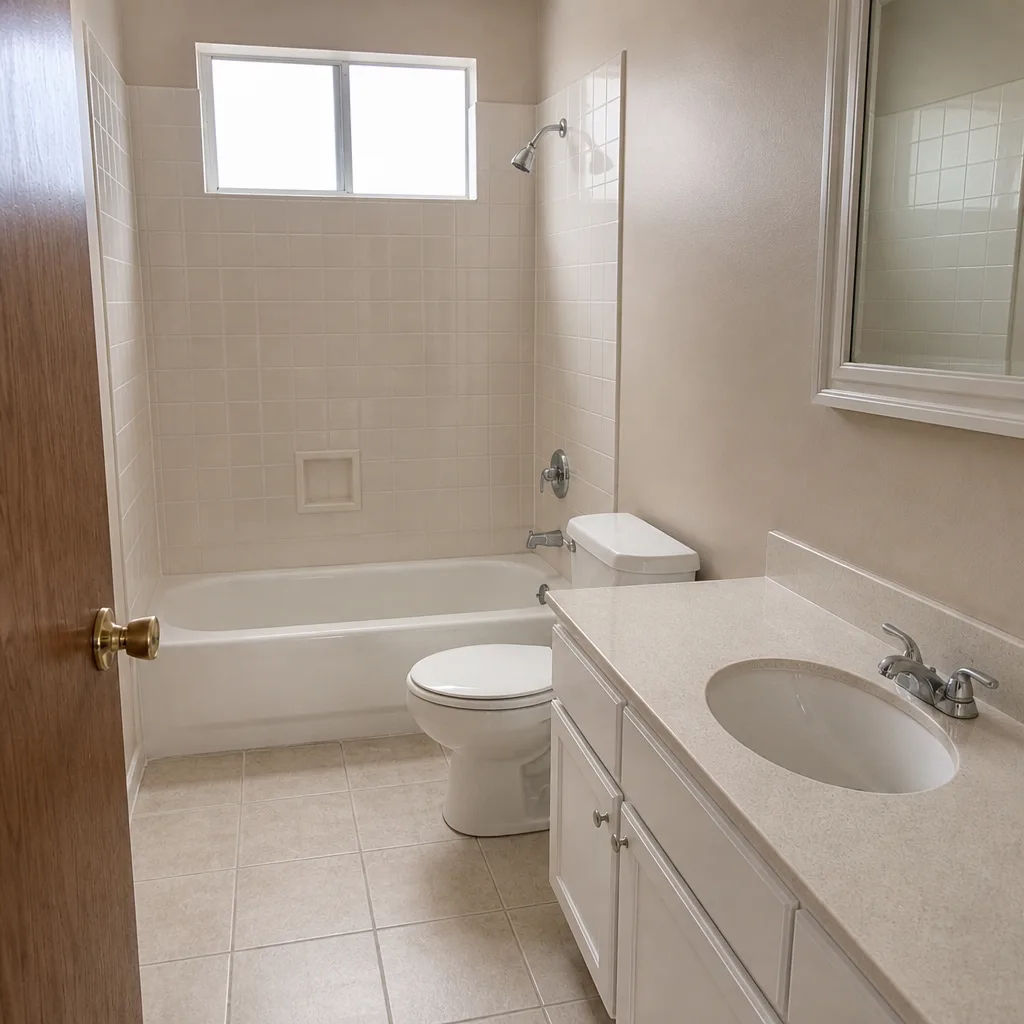 After
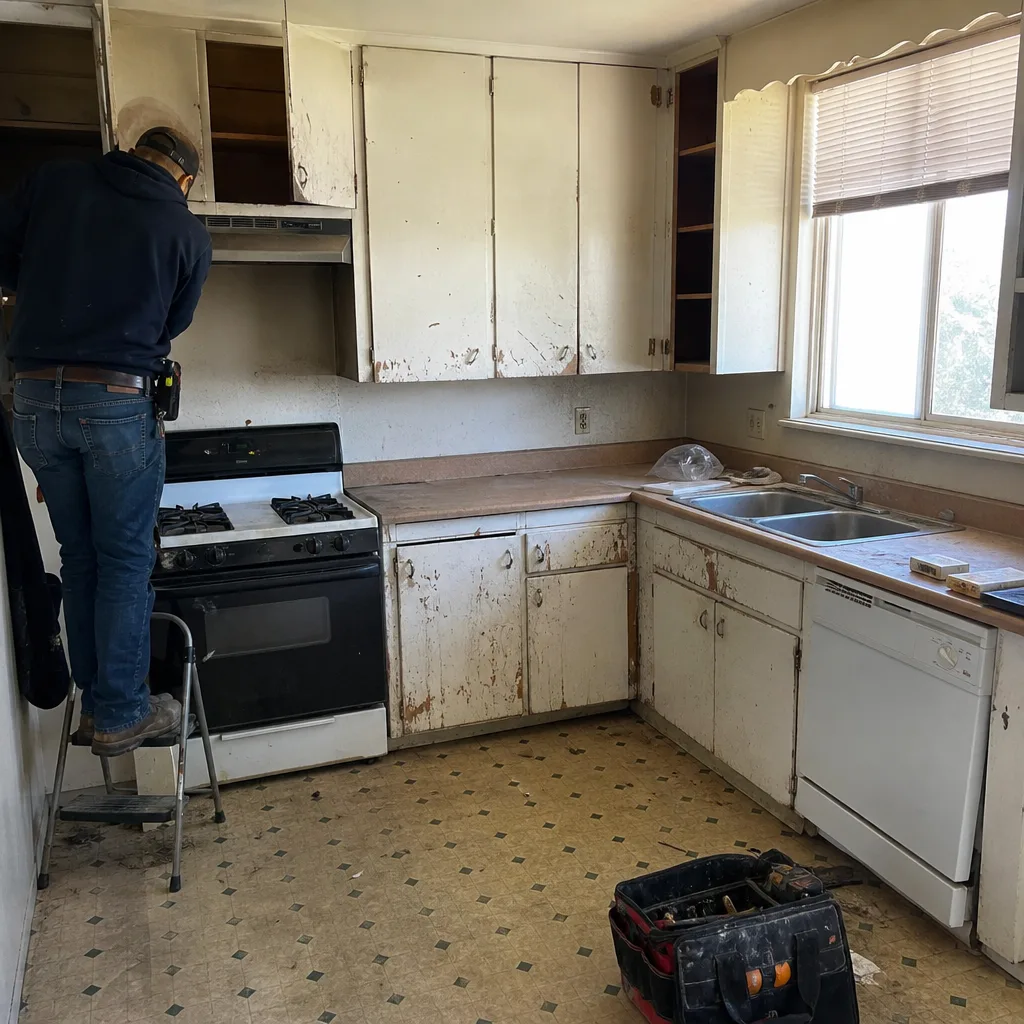 Before
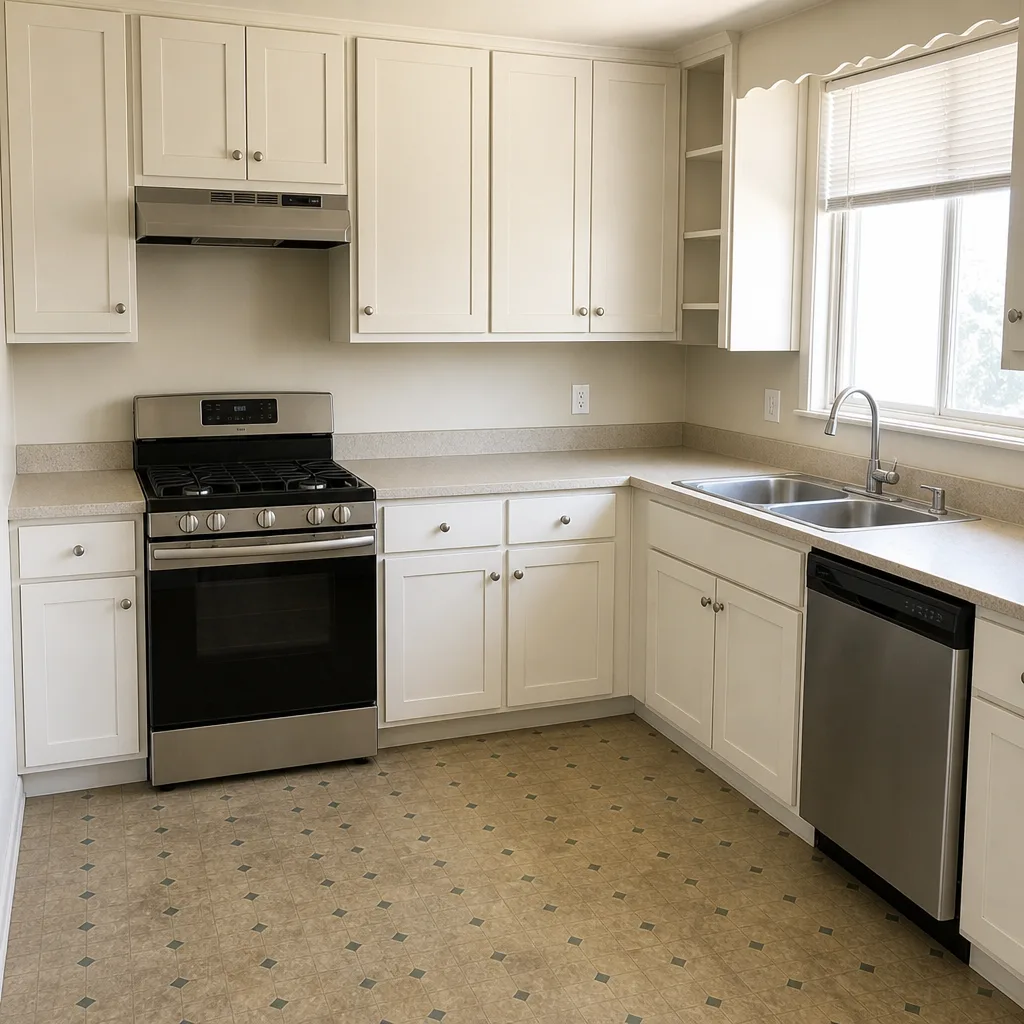 After
Common Mistakes to Avoid
- Power-washing efflorescence instead of finding the moisture. The bloom comes back within weeks, and the water pressure can damage block faces. Track where the water comes from first.
- Patching stucco cracks before noting their direction and size. A patched crack hides the most useful information you have about how the house is moving. Record it in photos with a coin for scale before you patch.
- Replacing tile because the roof leaks. The leak is often in the underlayment below sound tile. Have both layers evaluated so you don’t pay for tile you didn’t need.
- Assuming a ceiling stain dries itself out. Our dry climate dries a small stain fast, which makes a lingering moisture path easy to miss. Watch the stain area for growth after storms.
- Ignoring small fences and paver dips. These are cheap fixes when caught early and costly when a whole run of posts or a full paver field needs replacing.
- Overreacting to a single cosmetic crack. One hairline crack that hasn’t changed in years is not an emergency. The signal is change over time, in multiple places.
- Hiring different trades to handle one apparent problem. Exterior moisture, stucco, and interior stains are connected. Having one team trace the whole path saves you from three separate partial answers.
When to Call a Professional
Call a professional when any warning sign is new and growing, when two or more symptoms appear together on the same wall or in the same room, or when movement is near a foundation line or a wall holding back soil. Call sooner for a door jamb binding that won’t release, a ceiling stain that grows after a storm, a roof line that visibly sags, or a retaining-wall face that leans. These are the signs that cost less to assess than to ignore. Our technicians have up to 10 years of experience reading exactly these patterns in high desert homes, and we look at the envelope as a whole, from the roofline down to the driveway edge and the fence line. Construction Palmdale offers free estimates in Palmdale. Call (844) 320-6596. We answer 24/7. Fast dispatch from 7am to 7pm, Sunday through Friday. A call outside dispatch hours is booked into the next opening.
Frequently Asked Questions
No. A single diagonal crack above a window that hasn’t changed in years is often cosmetic or minor settlement. A diagonal crack that’s widening season to season, or appearing on two facing walls at once, is the pattern that warrants a professional look. Photograph it, note the date, and compare it a few months later. Call (844) 320-6596 for an assessment if it’s growing.
Because the moisture source is still active. Efflorescence is salt migrating out of the masonry, and it returns until water stops getting into the block. Check the grading and drainage at the base of the wall, then look at whether the wall was ever sealed. If it returns after cleaning, it’s a water problem, not a stain. Call (844) 320-6596 for a look at the wall and the drainage around it.
If the tile surface is intact but you’re seeing interior stains, the underlayment is the suspect. If the tile itself shows granule loss, lifted ridges, or a visibly sagging line, the repair scope is larger. A roof walk that inspects both layers is the only way to know. Call (844) 320-6596 to schedule an estimate; it’s free and there’s no obligation.
Seasonal sticking usually points to moisture in the wood or movement in the framing, not to a door problem. If it releases in dry weather and returns each season, the interior humidity or an exterior moisture source is the likely driver. Persistent handling that gets worse year over year deserves a structural assessment. Call (844) 320-6596 and we’ll trace it.
A slight, even dip away from the house is low concern and monitored seasonally. A dip toward the house at a wall or garage apron, or a crack that steps out of line, is the pattern worth assessing. Call (844) 320-6596 and we’ll look at the drainage and the base material before recommending a repair.
Surface-only oxidation sits on the hardware head and stays there. Rust streaking down from a fastener line means the galvanizing has failed. Rust at a bolted joint or at a post base is the higher-priority pattern because it means the connection is losing holding power. Push a screwdriver into the base of a post; if it sinks, that’s rot. Call (844) 320-6596 to evaluate the structure.
The Bottom Line
The warning signs that matter most in Palmdale share a trait: they change over time or appear with another symptom. Hairline stucco crazing that stays put is cosmetic. A diagonal crack that grows, a ceiling stain that returns after storms, a fence post that rocks at the base, a paver dip that drains toward the house, and rust streaking from a joint in a line are signals worth acting on. The high desert makes these patterns more readable than in other climates because every stress shows up in the material. Read your own house first, photograph what you see, and call a professional when the pattern is new, growing, or paired. Our technicians bring up to 10 years of experience to that read, and our brand options (from shingle systems by the major manufacturers to Belgard pavers and Bufftech or ActiveYards vinyl fence lines) mean a repair or replacement gets scoped around your materials, not ours.
If you’ve read something on your house that you can’t place, get a second set of eyes on it before it becomes expensive. Call (844) 320-6596 for a free estimate. We answer 24/7. Fast dispatch from 7am to 7pm, Sunday through Friday. Construction Palmdale works across seven project categories, from roofing and pavers to kitchens and ADUs, so the same team that reads the warning sign can handle the repair.
Written by the team at Construction Palmdale.